DRAWING WITH THE RIGHT BRAIN
★★★★★ 9.5 from 164 reviews on Webwinkelkeur · 5,000+ books sold
Drawing is not a talent.It's learning to see.
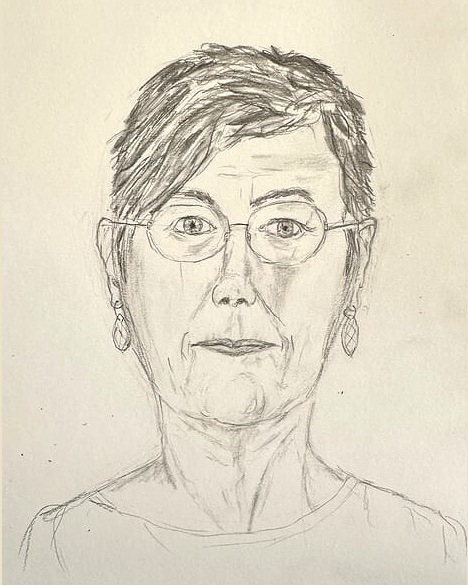
This is Wilma Spaay at the start of her drawing lessons.
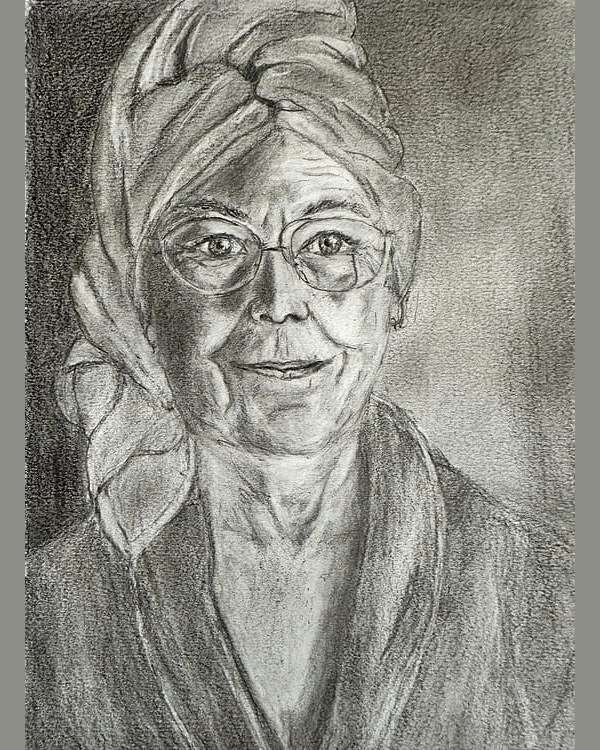
Twelve weeks later she draws a self-portrait again.
Same woman. Same mirror. Same pencil.
What a difference.
Wilma learned to see differently and to draw with the right brain.
And you can learn it too.
BEFORE
AFTER TWELVE WEEKS
CONFIDENCE
NO TALENT NEEDED
SEEING
RIGHT BRAIN
PORTRAIT
YOUR OWN STYLE
STEP BY STEP
HOW IT WORKS
You draw what you know. Not what you see.
That's why your drawing often doesn't look right. Not because you lack talent. Not because your hand won't cooperate. But because your left brain thinks it already knows what it's looking at.
And that is exactly the good news. Because you can do something about it.
LEFT BRAIN
Names things
Recognises symbols
Fast and automatic
RIGHT BRAIN
Looks
Sees shapes
Attentive and open
Your left brain uses language to make sense of the world. It names what it sees: a hand, an eye, a bird.
Those words are linked to drawing symbols, often formed back in childhood. Think of a little rake for a hand, or a simple V for a bird.
When your left brain is active while you draw, the word calls up that familiar symbol. Before you know it, you're no longer drawing exactly what's in front of you, but what your brain already knows.
And that's why your drawing often doesn't look like it.
The right brain has no language. It doesn't name things. It looks.
It sees what is really in front of you: lines, shapes, proportions, spaces, light and shadow. Including the small details the left brain so easily skips.
When you learn to see with the right brain, you get better and better at seeing what is really there.
And what you really see, you can draw.
Learning step by step to see with the right brain: that's what this drawing method comes down to.
You learn to let go of your left brain's symbols and draw what you actually see. Drawing stops being a question of talent and becomes a skill you can learn.
And once you learn to see like this, no subject is harder than another. A hand, a chair, a portrait: you learn to see them for what they really are — lines, shapes, spaces, proportions, light and shadow.
THEIR OWN DRAWINGS
See what happens when you learn to see differently.
Below is the work of four people who started with the method. Two drawings each: one made before they began the lessons, and one made after they had learned to see and draw with the right brain.
A hand, a chair and a portrait are known as difficult subjects to draw. That's exactly why we use them in the method. Because it's with something that seems hard that you notice how much difference learning to see differently can make.
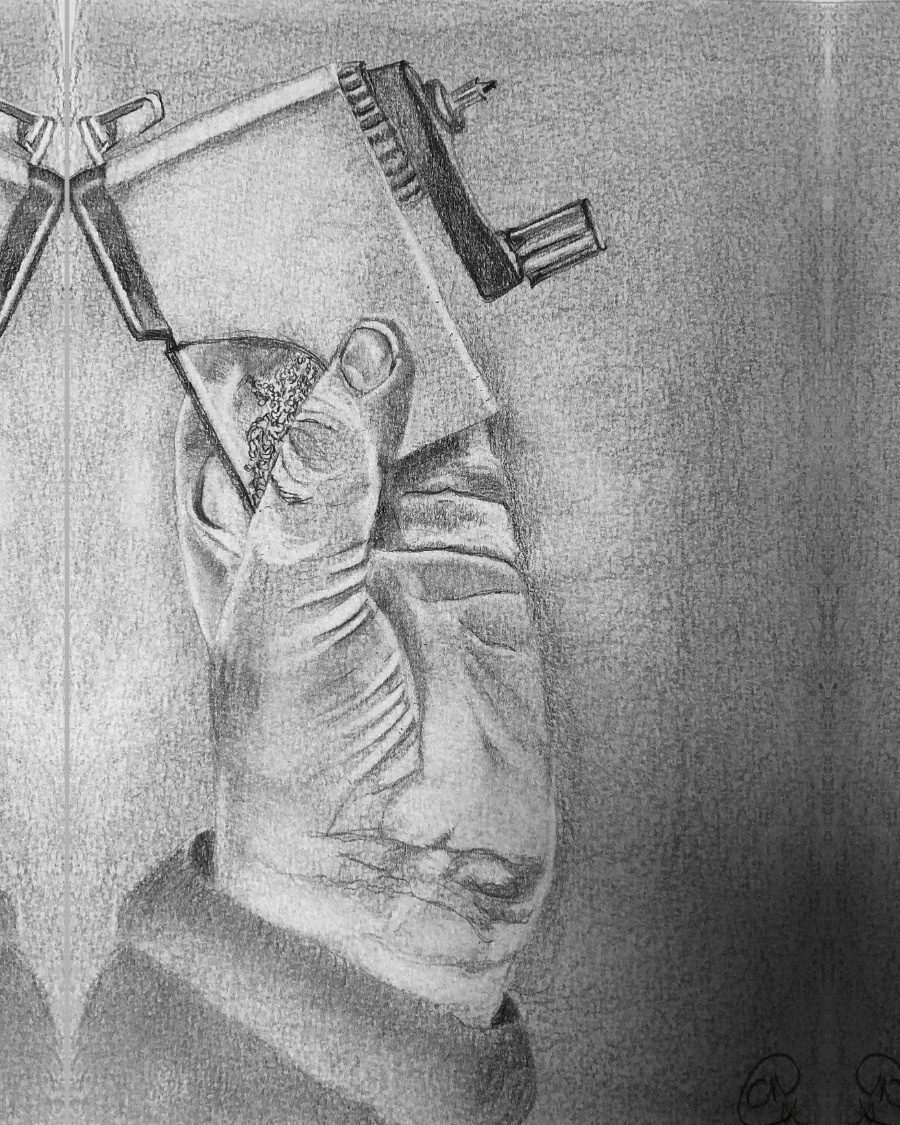
CHANTAL · THE HAND
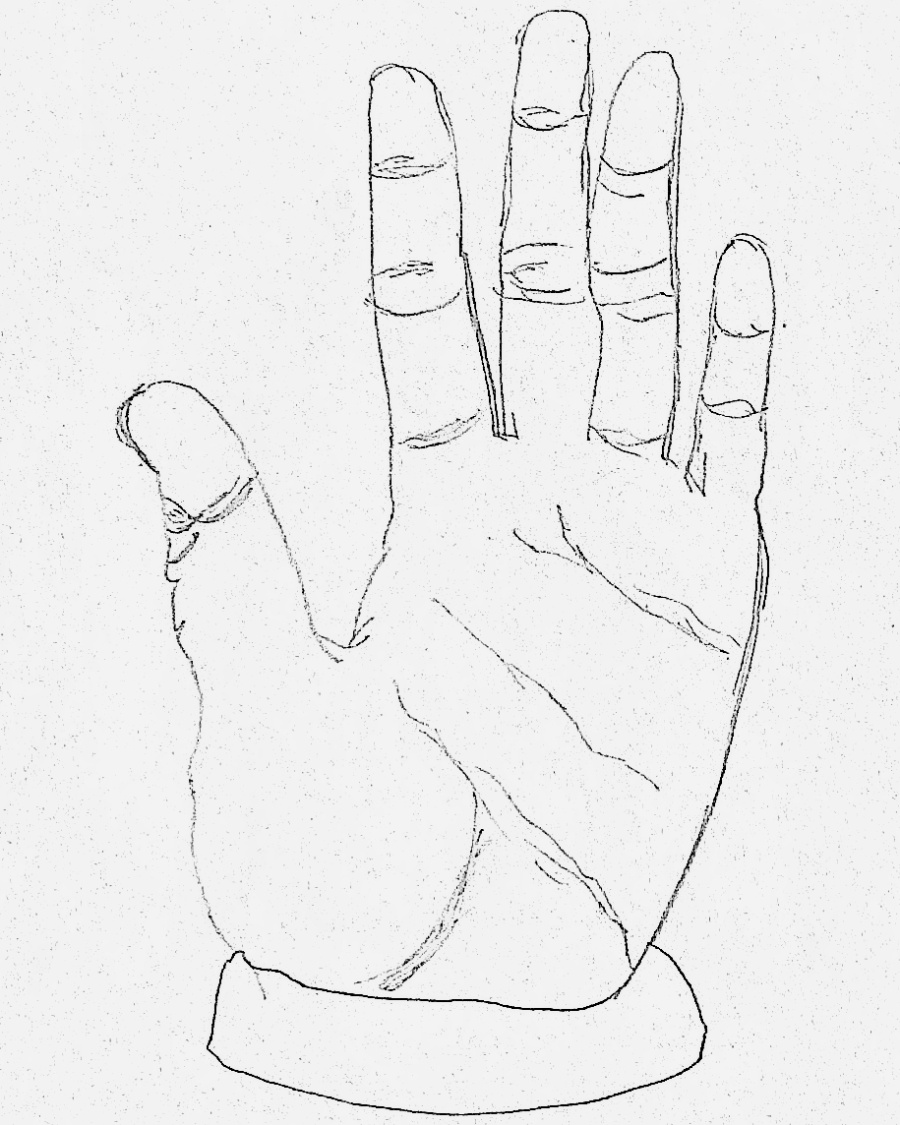
Drawing a hand asks you to really look.
Many people find hands hard to draw. Since childhood, your left brain has had a drawing symbol for a hand.
Before the lessons, Chantal mostly drew that symbol too. In this first exercise she learned to put her left brain on ‘pause’ and really look.
Four days later she isn't just drawing a far more complex hand. Suddenly she sees much more: shapes, folds, nails, light, shadow and small details.
From a symbol to a living hand.
CHANTAL · BEFORE
CHANTAL · AFTER FOUR LESSON DAYS
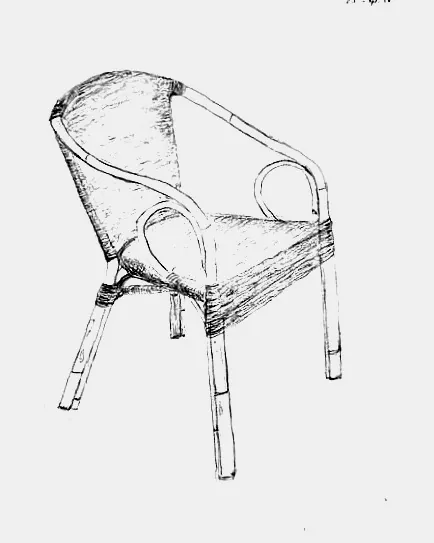
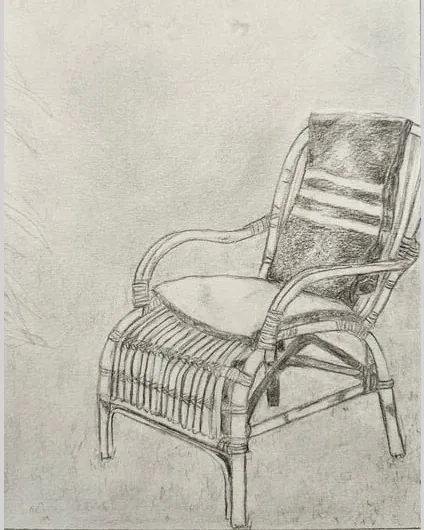
WILMA · THE CHAIR
You don't draw the chair. You draw what isn't there.
When we draw, we naturally look at the object itself. Here, the chair. And of course your left brain already has a symbol for that too. But what happens if you don't look at the chair, but at the negative spaces around it and in between?
A revelation, a Belgian student once called this exercise.
WILMA · BEFORE
WILMA · AFTER FIVE LESSON DAYS
WITHOUT GUIDANCE
Michael and Fred did it on their own.
No course, no coaching, no group to keep them going. They bought the book and worked through it, from the first exercise to the last.
And both ended with what may be one of the hardest drawing assignments of all: their own self-portrait.
Below you can see where they started — and what happened when they learned, step by step, to see.
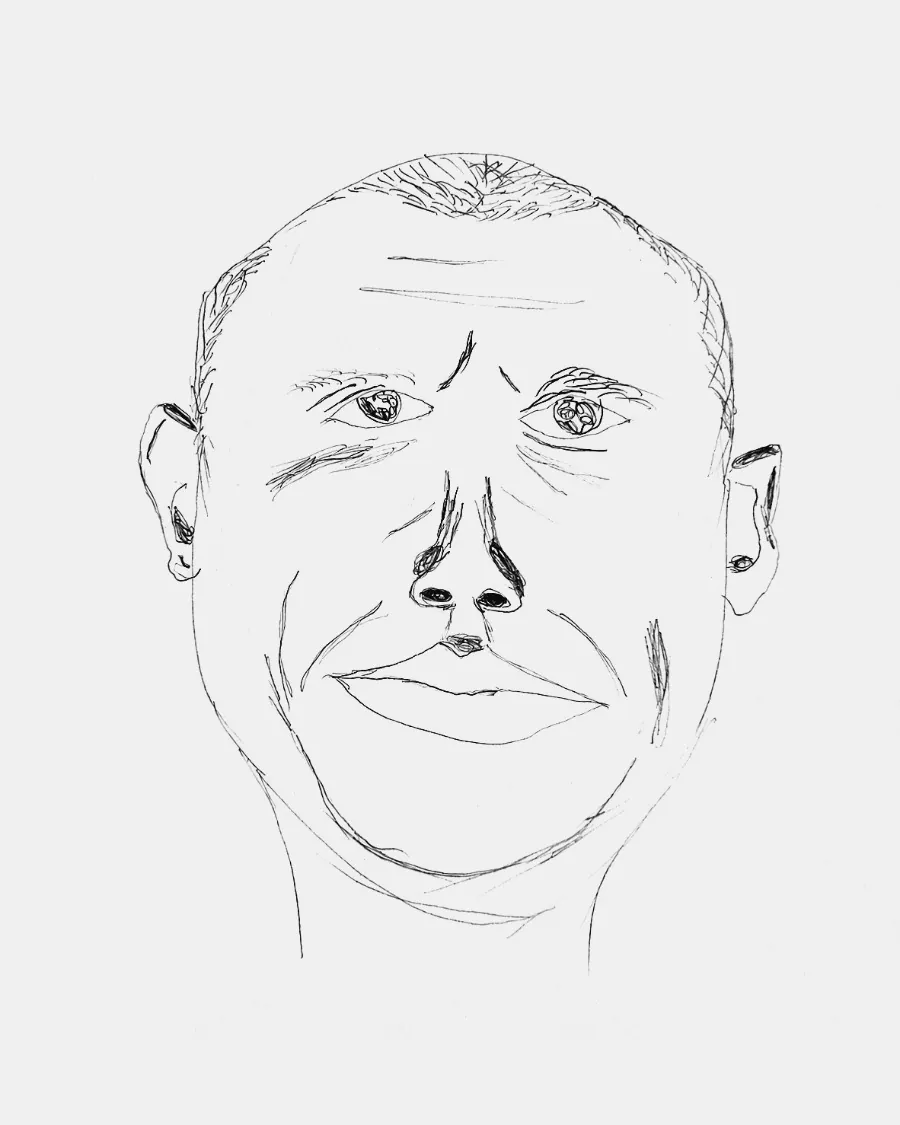
MICHAEL · THE SELF-PORTRAIT
This is how almost everyone draws when they start.
Look at Michael's first self-portrait and you may recognise your own drawings: an outline, with eyes, nose and mouth placed where you expect them to be.
Michael had never drawn before. He worked through the book on his own and learned, step by step, to stop drawing what he knew and to look at what he actually saw.
Along the way he discovered how much he enjoyed it. He drew the second self-portrait when he had finished the book.
MICHAEL · BEFORE
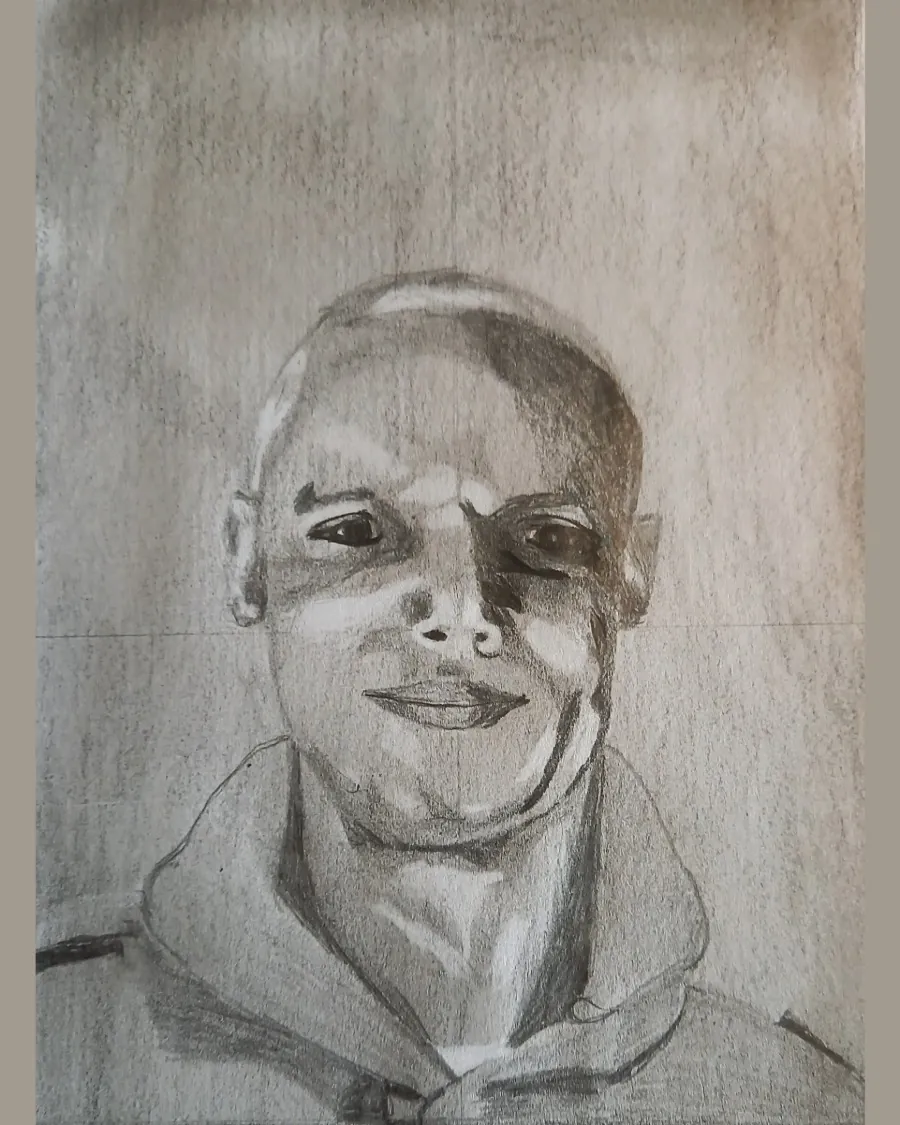
MICHAEL · AFTER THE BOOK
FRED · THE SELF-PORTRAIT
Can you already draw? Then there's still a whole world to discover.
Fred already had drawing experience when he started. You can see it straight away in his first self-portrait.
But by learning to see with the right brain, he makes a huge leap. Proportions, shapes, light and shadow become more accurate — and his portrait comes to life.
Everyone starts at their own level. And from there, you keep growing.
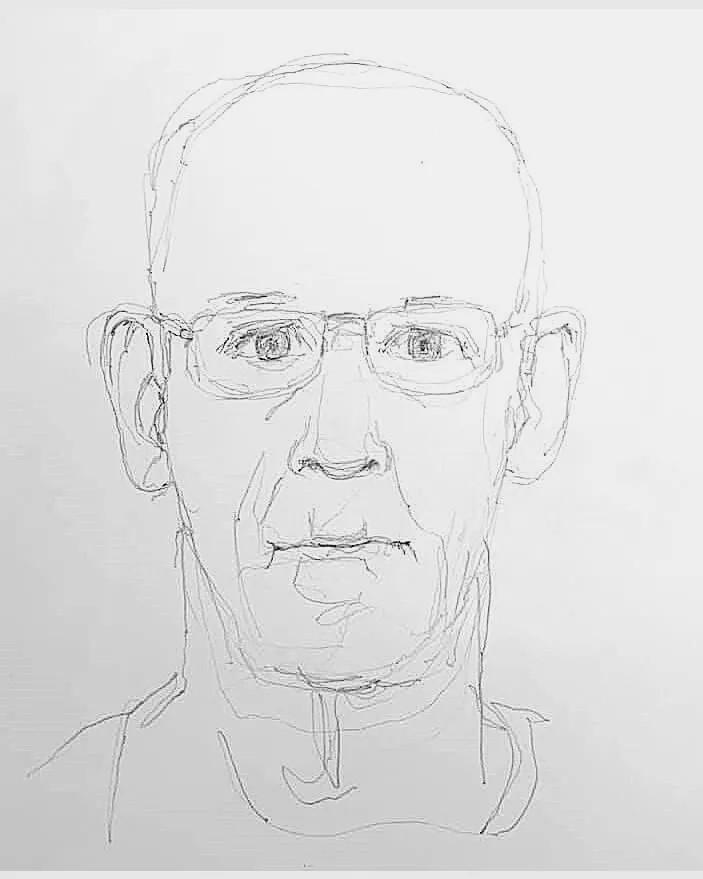
FRED · BEFORE
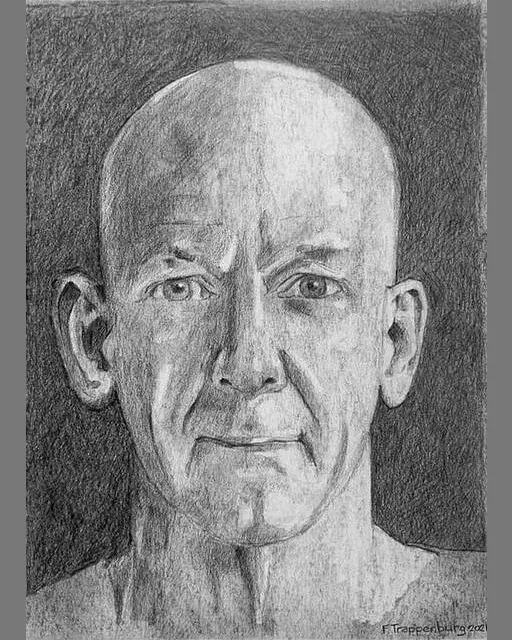
FRED · AFTER THE BOOK
Drawing is not a talent.It's learning to see.
TRY IT YOURSELF
Discover that you can already draw.
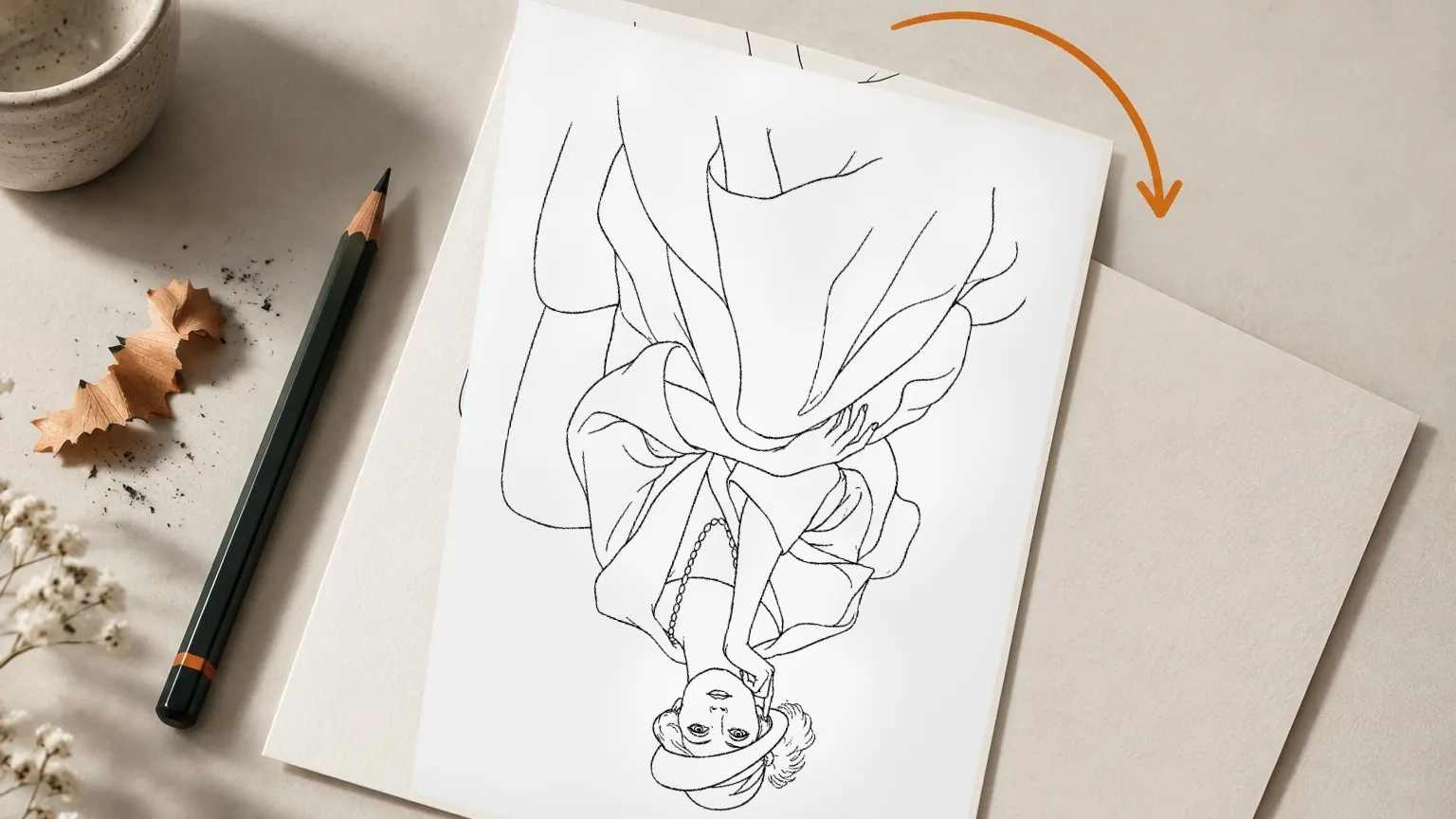
You get an unusual drawing assignment that you do upside down. That makes it much harder for your left brain to name what it sees, and your familiar symbols get less of a chance.
You look at lines, shapes and spaces and draw what you really see.
Chances are you'll look at your drawing afterwards and think: did I make this?
WHAT YOU NEED
A pencil, a sheet of paper and an hour without interruptions.
WHAT IT COSTS
Nothing. Be my guest.
WHAT YOU GET
The complete drawing lesson, with the exercise and the explanation of why this method works
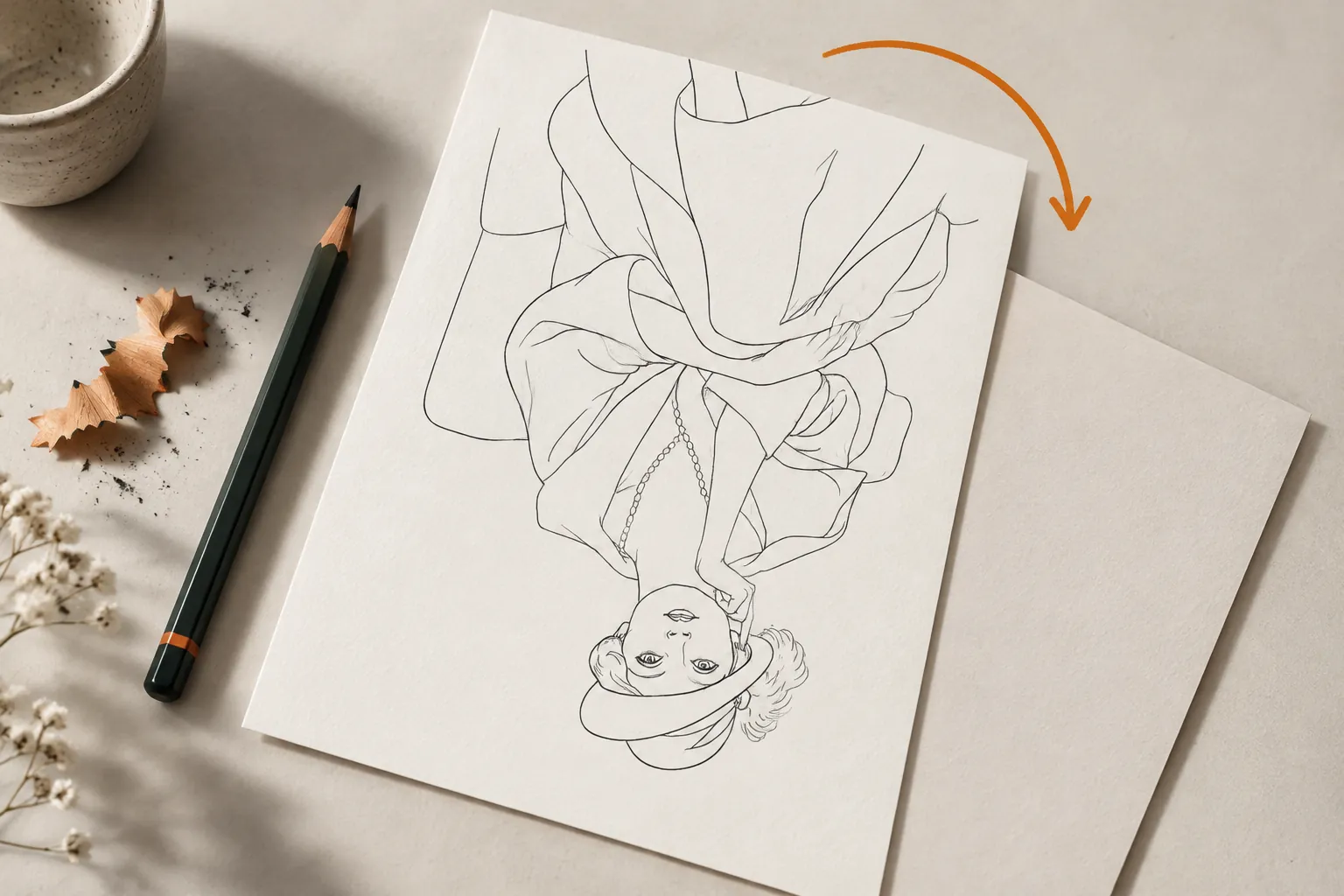
This is what you'll do: copy a line drawing that's upside down. Your left brain can't make sense of it — and that's exactly the point.
REAL EXPERIENCES
They all thought they couldn't do it.
What happens when you discover that you can draw after all.
In their own words.
ABOUT THE BOOK AND THE WORKBOOK
“A month ago I would never have thought I could draw this. I've really become a fan of my right brain.”
ELKE · BOUGHT THE BOOK
“The book and the Workbook gave me the courage and the freedom to draw, and to enjoy it.”
JANET - DUO PACKAGE
“I can now draw everything I see and I keep learning. I'm really happy with it!”
BOUGHT THE DUO PACKAGE
“The best drawing book ever!”
ERIK · BOOK
ABOUT THE PROGRAMMES
“I have overcome and broken the false belief that was imposed on me as a child — ‘you can't do that’. I'm so happy about that.”
EMI · DE F*CKING FINISH
“No questions for now, I'm just enjoying everything :-) Thank you so much for the support and the programme so far. It makes me genuinely happy!”
KARINA · BELGIUM
“Hip hip hooray, I'm drawing — and not from a photo but from real life. Thanks to the challenging and inspiring assignments you see more than you ever thought possible. Wouldn't want to miss it.”
NETTY · RB100
“Drawing with the right brain is a revelation. All the things you suddenly see that you'd normally never notice. It has made me a happier person too.”
EDWIN · RB100
WHAT DRAWING DOES FOR YOU
Drawing isn't just fun.It's also good for you.
British professor Daisy Fancourt has spent fifteen years researching what art does to people.
It affects your stress hormones. It works through into your immune system. And there are more and more signs that it reaches all the way into your genes. Without you noticing a thing.
Healthy food, sleep, exercise — all good for your mind. Art does more, says Fancourt.
75%
of participants had lower stress hormone levels after 45 minutes of drawing. Even those who thought they couldn't draw.
DREXEL UNIVERSITY · 2016
31%
lower risk of death among 6,710 people over fifty who regularly engaged with art. A correlation, not a prescription.
BMJ · 2019
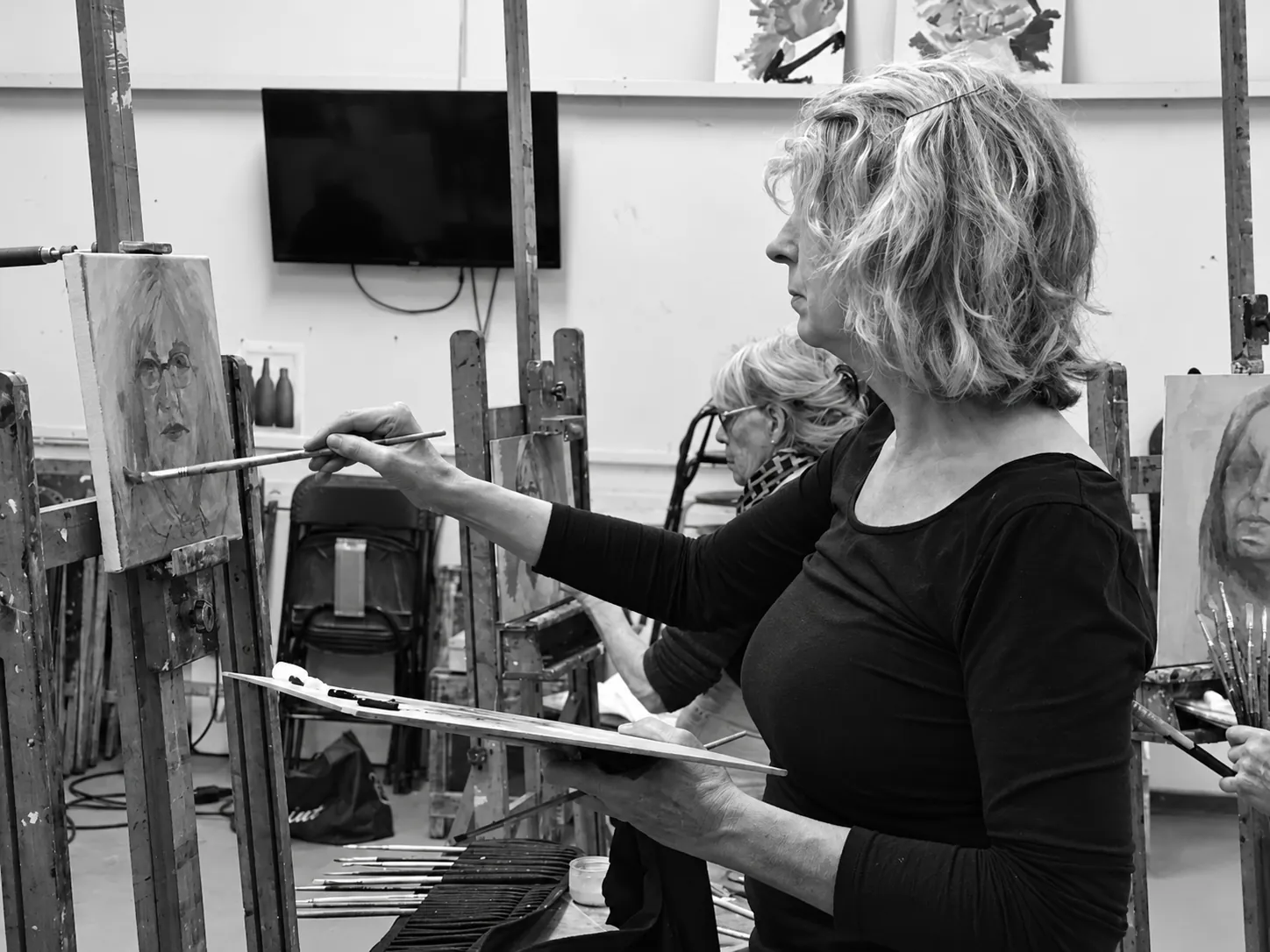
WHO TEACHES YOU
What I bring you.
I have been teaching people to draw with the right brain since 1995. For many years in the classroom, now mainly through my books and online programmes.
Over all those years I've seen where people get stuck, why they sometimes believe they can't draw — and what they need to move forward after all.
In my programmes below, I'm there with you myself. So you don't have to figure it out alone. That's the difference between learning alone and learning with me
1995
TEACHING SINCE
7,000+
STUDENTS BEFORE YOU
2019
NOMINATED PORTRAIT PRIZE
WHERE YOU CAN START
Choose how you want to learn to draw.
The method has two steps: first learning to see, then continuing to draw and growing further.
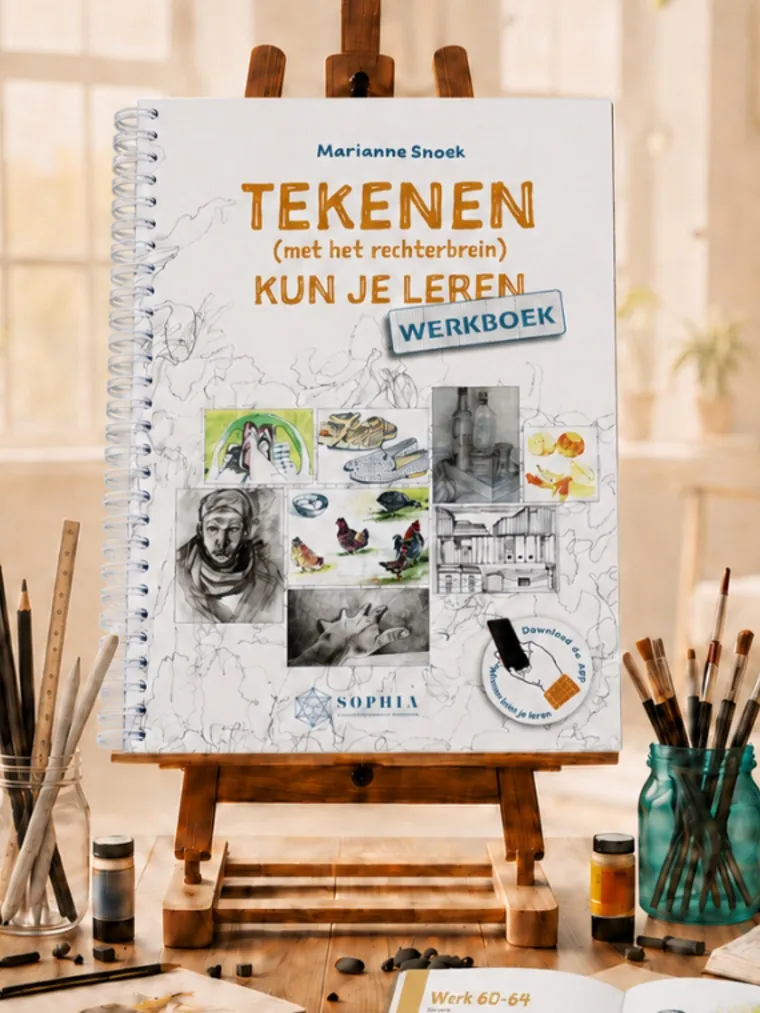
You can work with the books on your own. Or choose a programme where I guide you and you do it together with others.
PHASE 1 · WHEN YOU START
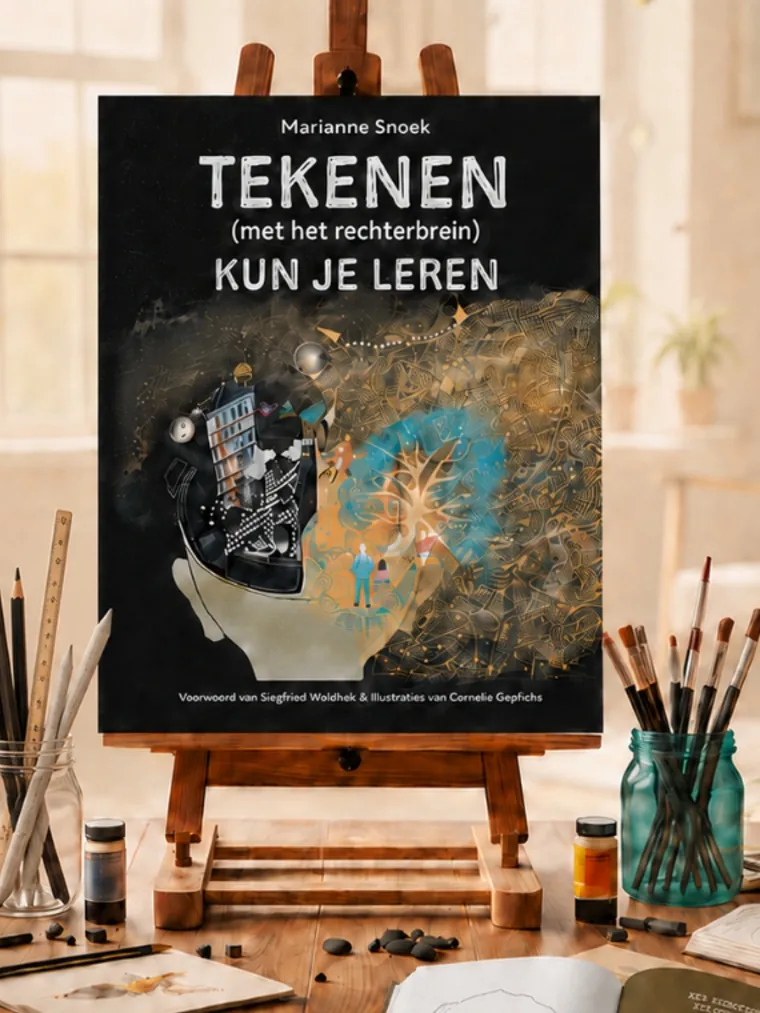
Learning to see.
From your first line to your own portrait.
PHASE 2 · WHEN YOU WANT TO KEEP GOING
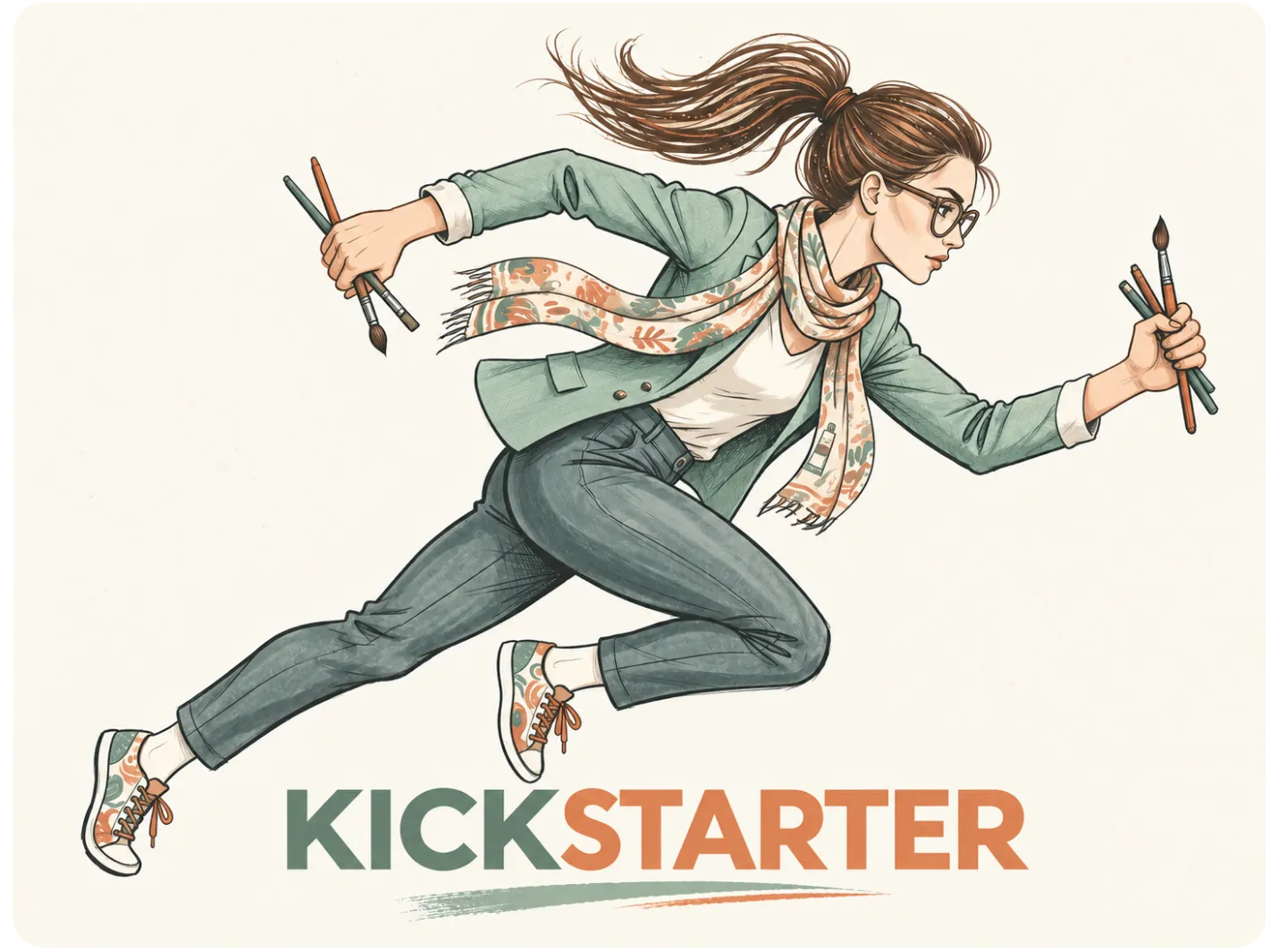
Keep going.
For those who have finished the book and don't want to stop.
FREQUENTLY ASKED QUESTIONS
What people ask me before they start.
These are the questions I get most often by email. Almost always, the same worry lies underneath: surely I'm the exception.
Can I really learn to draw, even if I think I have no talent?
Learning to draw well has far less to do with talent than most people think. It starts with learning to see: really seeing what is in front of you, instead of drawing what you think you see.
The method was developed by the American artist Betty Edwards. I have worked with it since 1995 and over all those years have developed and refined it further.
Seeing can be learned. And with it, so can drawing.
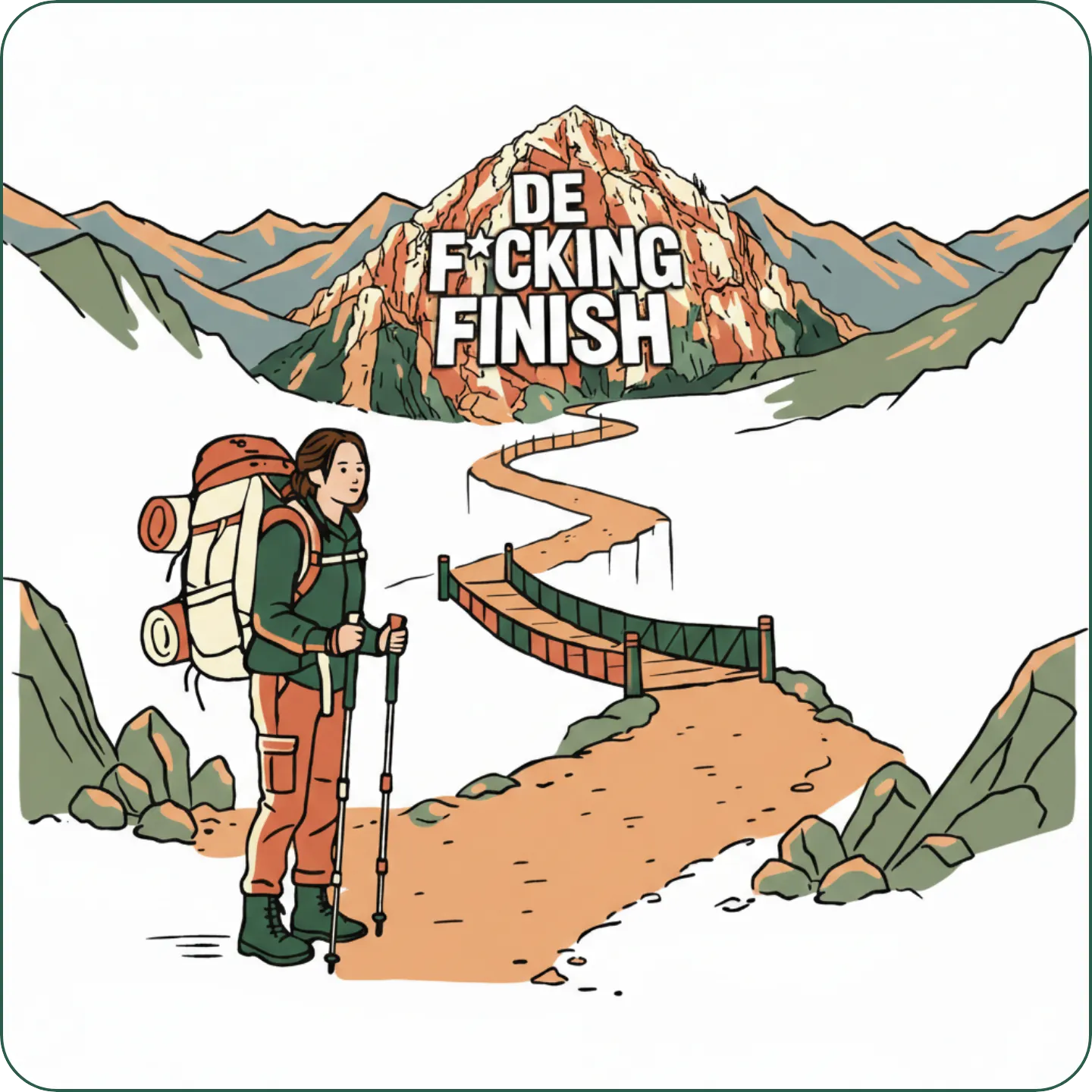
Where is the best place to start: the book, Kickstarter or De F*cking Finish?
That mainly depends on how you like to learn.
Want to work independently and at your own pace? Then start with the book.
Would you like to get to know the method first? Then choose the Kickstarter.
Want to work through the whole book with my guidance and together with a group? Then De F*cking Finish is for you.
Whichever route you choose: the method that teaches you to see is the same.
Is this method also suitable if I already have drawing experience?
Definitely. Even if you can already draw quite well, this method has a lot to offer you.
You don't relearn how to draw an eye, a hand or a portrait. You train your perception and discover where you're still drawing from what you know, rather than what you really see.
Fred, whom you saw above, already had drawing experience when he started. Even so, he made a big leap by learning to see differently.
However much experience you have: learning to see better means learning to draw better.
Am I too old to start?
No. Quite the opposite.
Especially as you get a little older, drawing can bring you something very valuable. You start looking more attentively and seeing more and more of the world around you. Drawing brings your attention to the here and now and can become a lovely moment of calm and focus.
You're never too old to learn to draw.
My oldest student was 83. After the lessons she set up her own studio at home. :)
Might I be the one it doesn't work for?
That's a fear many people have. But the ability to learn to draw is already in you.
As with any new skill, it's mostly about practising and keeping at it. Even when a drawing doesn't turn out the way you'd hoped.
If you keep practising, you'll notice you see better and better, draw better and better, and enjoy it more and more.
Why does drawing with the right brain work differently from an ordinary drawing class?
Because this method tackles the real problem behind ‘I can't draw’.
You learn step by step how to see differently. Your left brain quickly thinks it knows what something looks like, and that can get in the way of really looking. With specific drawing exercises you gradually learn to let go of that automatic way of seeing.
That gives the right brain room to perceive what is really there.
And what you can really see, you can draw.
How much time do I need to learn to draw?
With the book you work entirely at your own pace. Most exercises take about 20 minutes to an hour.
In De F*cking Finish you work through the book in 12 weeks. Allow 2 to 3 hours a week on average.
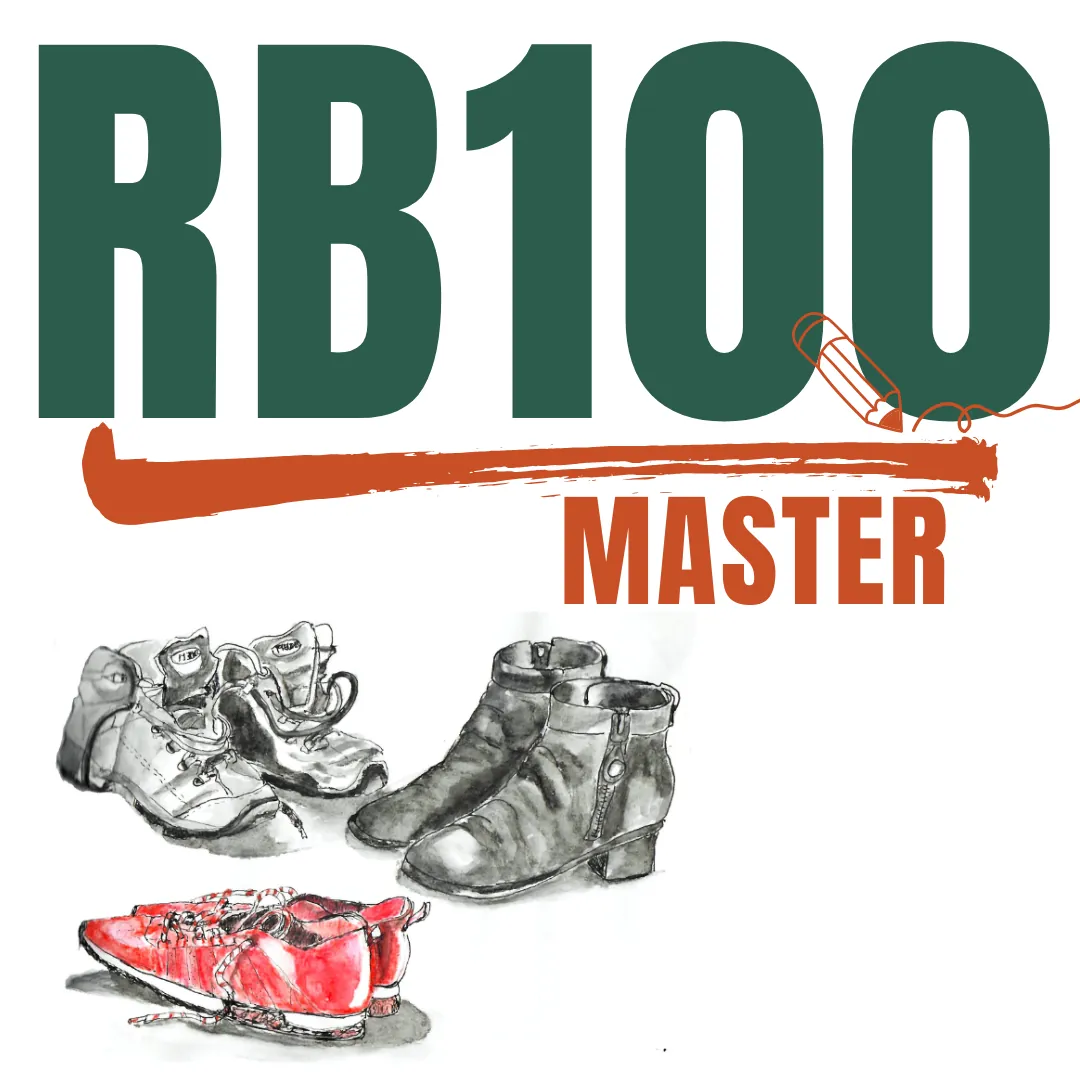
In RB100 you draw for at least 30 minutes a day, 100 days in a row.
No endless hours. Just setting aside a little time each week that's entirely for you.
Do I need a lot of drawing materials?
No. You need surprisingly little: a few good pencils, graphite sticks, an eraser and drawing paper.
We also work with a viewfinder. It helps you learn to see better and is used in several exercises. The viewfinder comes in the ZoekerPlus package.
So no studio full of supplies. With good basic materials you can get started.
What can I draw once I've mastered the method?
Much more than you probably think right now.
You don't learn to copy one subject. You learn to see. That means you can use the same principles for a hand, a chair, a still life, a landscape or a portrait.
Of course you keep developing the more you draw. But you've learned something fundamental: how to look so that you can draw what you see.
And that is what you take with you to every new subject.
When does De F*cking Finish start?
The next De F*cking Finish starts on 4 April 2027. After your order you get access to Huddle. From the start date, you follow the twelve weeks together with the group.
What if I can't draw for a week or go on holiday?
No problem. You can work ahead a little beforehand, or pick up again after your holiday and catch up on an exercise if needed.
What matters most isn't that everything goes perfectly for twelve weeks. What matters most is that you carry on afterwards.
Can I pay in instalments?
Yes. You can pay for your purchase in up to 4 instalments, spreading the amount over several months.
IN THE MEDIA
“Drawing? Either you can or you can't. That's what many people think. But it isn't true, as artist Marianne Snoek knows.”
Yvonne Hulsbos, Gooi- en Eemlander
From Wonderen als het kwartje valt (Wonders when the penny drops), 2022