LOOKING DIFFERENTLY · MARIANNE SNOEK
What's the story with brain hemispheres and drawing?
The right side of the brain holds the power of observation that you need in order to draw. People who think they can't draw are drawing with the 'wrong' part of their brain. Betty Edwards, an American artist, discovered after years of research that it is the abilities of the right side of the brain that make it possible for people to draw well from observation.
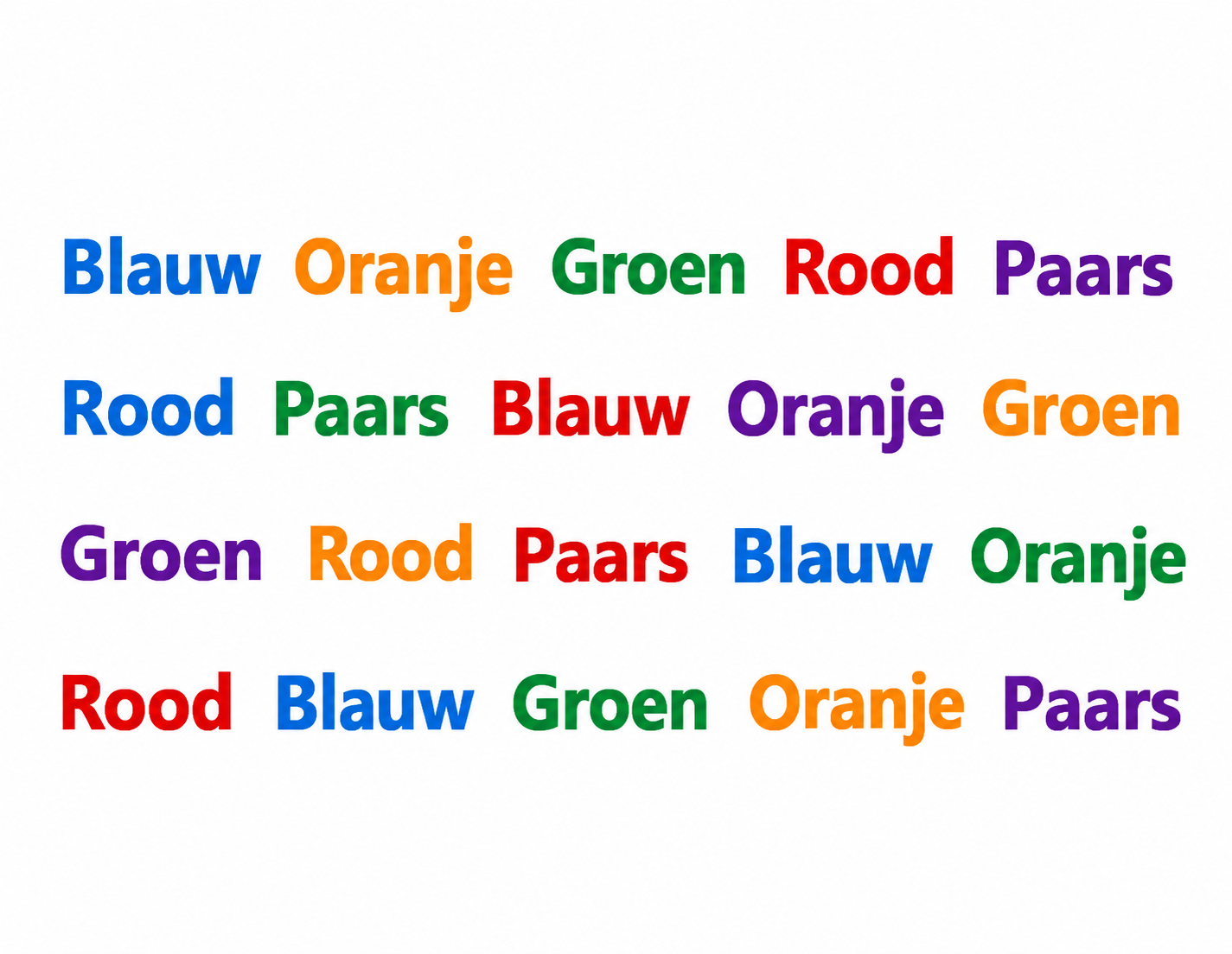
Look at the image with words and colours and name the colours (NOT the words!) The first line is easy, because the words and colours match. When this changes – when the colours are DIFFERENT from the word – you get confused. With the next word, the right side of your brain wants to say ‘blue’ (the colour) and your left hemisphere wants to say the word: ‘red’. This already shows that your two hemispheres each have their own agenda.
Watch this YouTube video about it as well.
Two ways of seeing and thinking
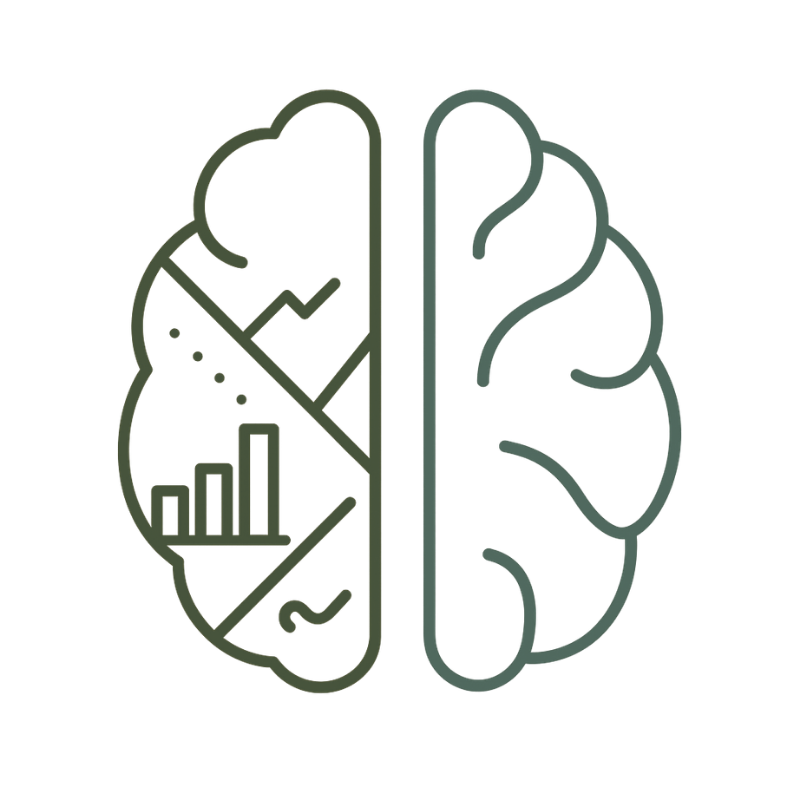
Left brain
Language and symbols
Arithmetic and logical reasoning
Analysing and distinguishing details
Organising and working step by step
Planning and keeping track of time
Right brain
Images and imagination
Feeling and intuition
Seeing connections and the whole
Spatial perception
Creative exploration
Symbols
Our left brain is responsible for the fact that we can read, write, reason logically, do sums, tell the time and everything else you find in the left brain's list. If you take a good look at it all, you will discover that the left brain specialises above all in symbols. After all, what is language? Language is nothing more than an agreement we have made with each other about what certain little marks (symbols) mean. The same goes for arithmetic. Time, likewise. In short, the left brain is the storehouse for all the symbols we use.
Including drawing symbols.
What are drawing symbols?
As small children, we pick up a pencil and start drawing. It doesn't look like anything yet. Then something special happens. Very early on, every child makes an artistic discovery of their own: that they can represent what they see with a symbol. Suddenly the lines and circles they make become ‘mummy’ or ‘daddy’ or ‘the dog.’ The child has discovered that they can represent the world around them with a symbol. This is how the first drawing symbols come about.
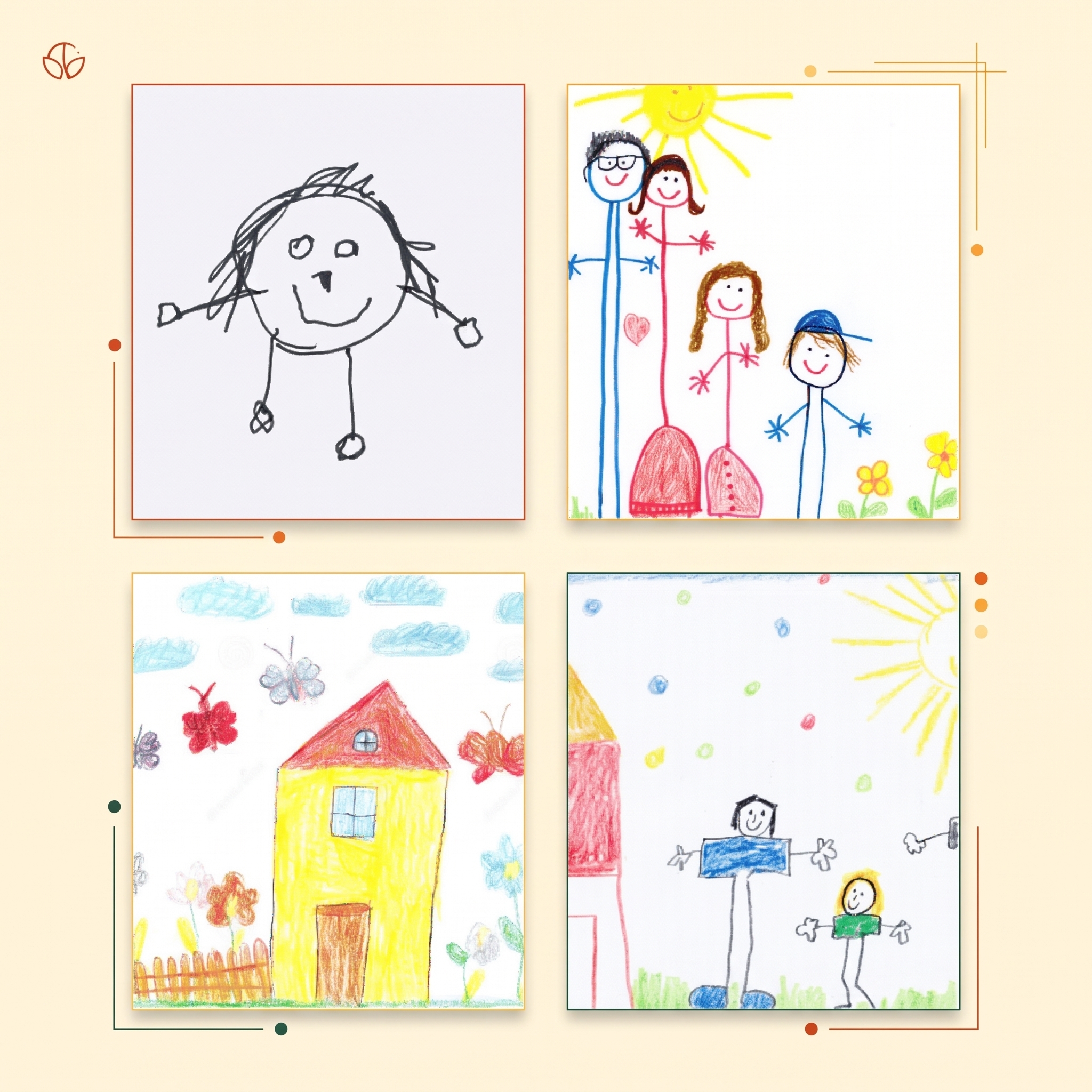
If you look at these children's drawings, you can see that the ‘little hands’ are not real hands, but a symbol for a hand. The same goes for the eyes, the mouths, the hair, the butterflies and the house. In her drawings, the child uses ’drawing symbols.’
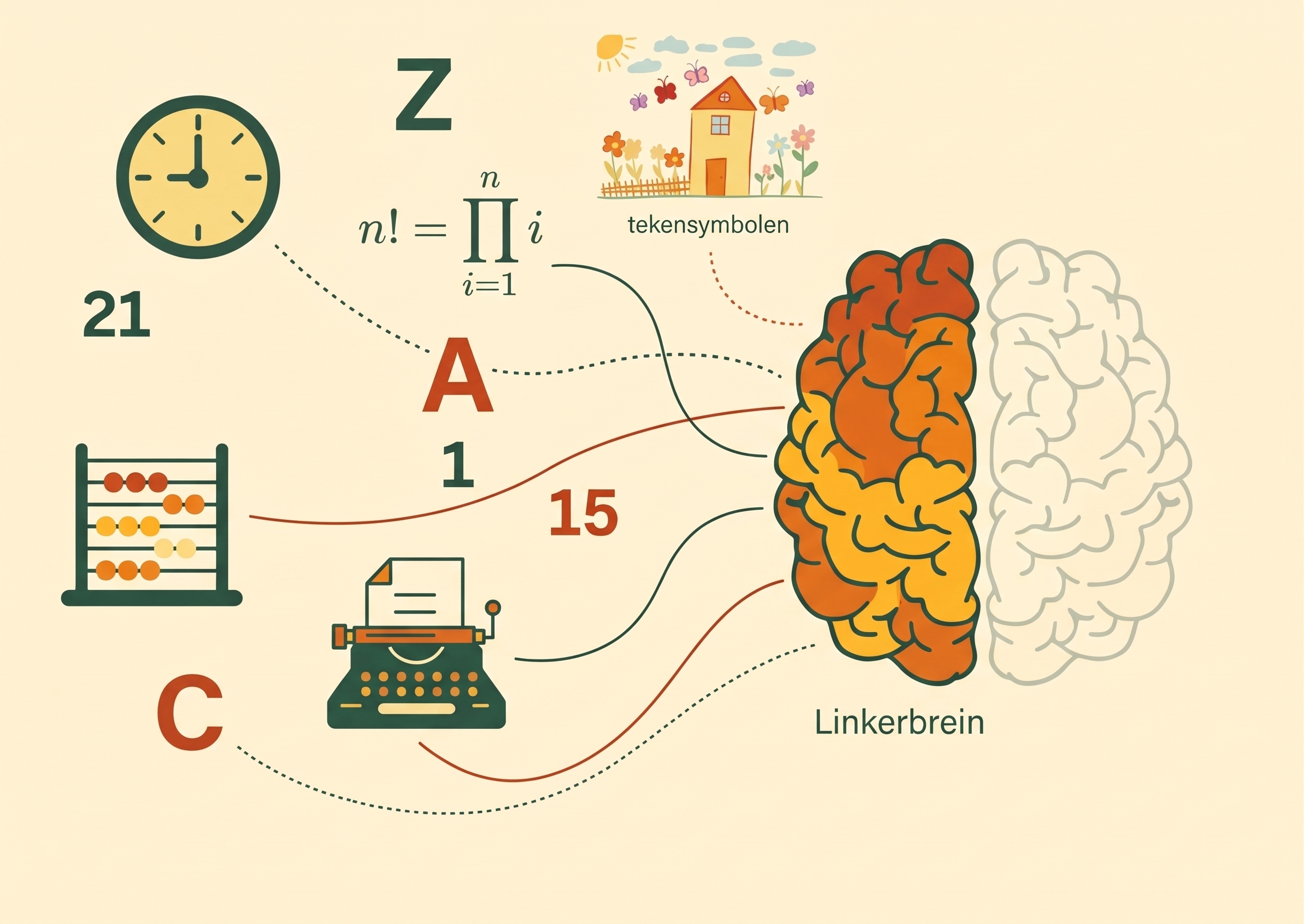
Our left brain is our ‘symbol’ brain
Puberty
During puberty, major changes take place in the brain. This also applies to the functions of the left and right brain. Everything that, in an adult, definitively belongs in the left brain moves to this part of the brain around that time. This is called ‘lateralisation’: everything that ultimately belongs in the left brain now moves to this part of the brain. The same goes for the right brain. This is the moment when the ‘drawing symbols’ also end up in the left brain. Together with all the other symbols, such as language, arithmetic, reasoning, time and so on.
From that moment on, it becomes harder for a person to draw well from observation. Why? Because when someone wants to draw something, a word often comes up: ‘I want to draw a tree’ or ‘a house.’ And whoops, there comes the left brain straight away with the drawing symbol it has available for it. The drawing symbol that was developed during childhood. The drawing won't look like the real thing and people become discouraged. Because yes, these drawing symbols often have little to do with reality. They are childlike (logical, since they were developed during childhood) and caricatural. And what people then say is: ‘I can't draw!’ And they stop drawing.
The solution
To break free from the ’tyranny’ of the left brain with all its (drawing) symbols, it helps to put this part of your brain ‘at rest’. In our daily lives the left brain is often dominant, i.e. it is active almost all the time. This makes it hard to draw what you really see. Before you know it, the left brain comes up with a ’drawing symbol’. Then it becomes very difficult to see what there really is to see. You then think: ‘I can't draw!‘, but that isn't true. You can draw very well, as long as you know how to observe properly. And the left brain simply cannot observe in the way that is needed to draw!
Give your right brain room
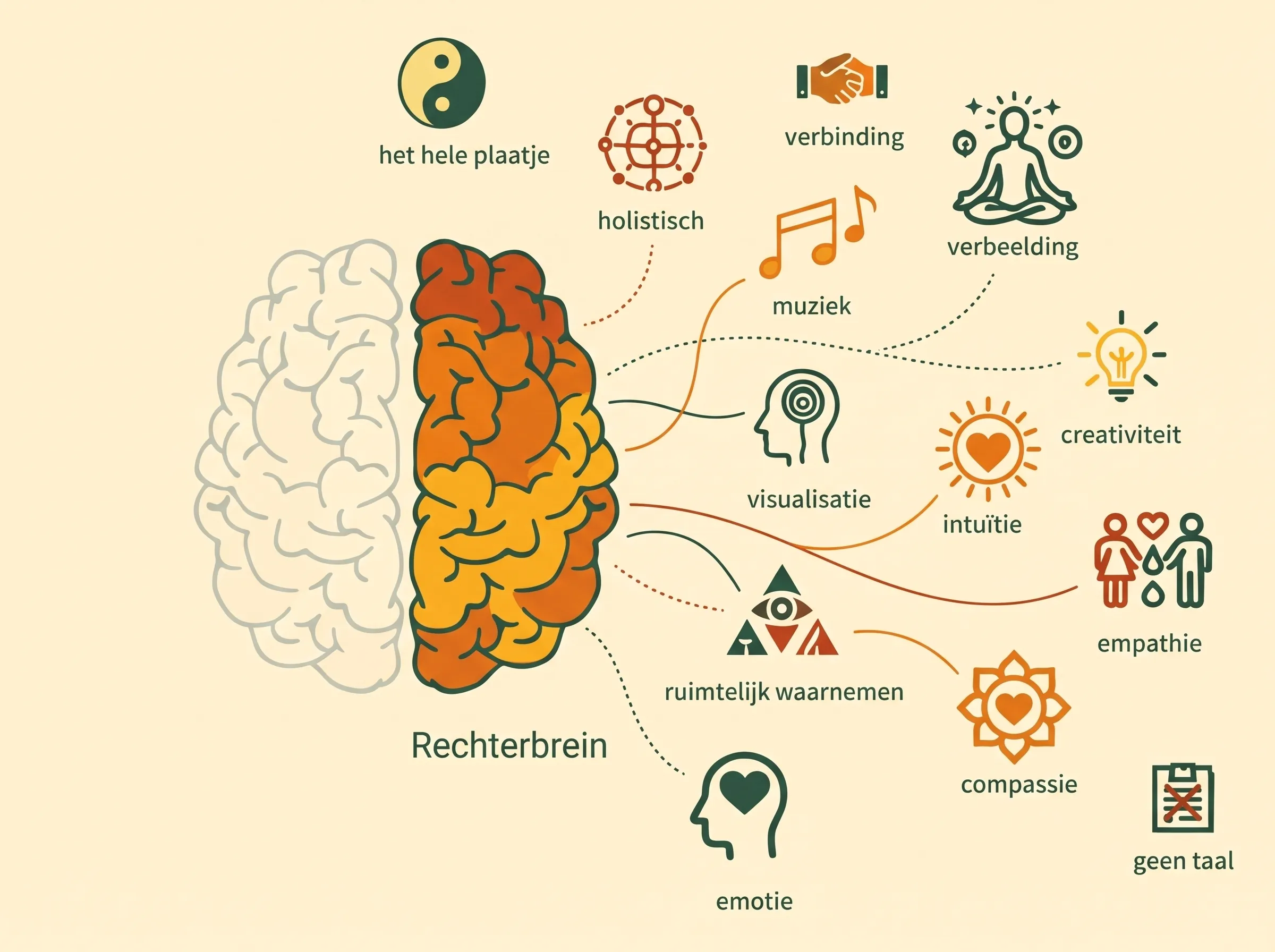
Tekenen (met het rechterbrein) kun je leren
All the exercises in the book Tekenen (met het rechterbrein) kun je leren are aimed at putting your left brain ‘at rest’. By doing this, you give the right brain room to observe and draw. When this happens, you will notice that you can suddenly draw what you see much more easily and that your drawing ability comes on in leaps and bounds. You will enjoy drawing more and more.
I’ll buy the book →
ABOUT THE AUTHOR
Marianne Snoek
Founder and owner of Sophia Academie. Drawing coach, writer and artist.