Do you think you
can't draw?
Try drawing with the right brain for free: discover with two exercises how looking differently helps you draw. You start with the vase exercise. Then you copy an image upside down.
Just give it a try. You don't need to be able to do anything beforehand.
No experience needed. Just paper, a pencil and some time.
You can start straight away, without signing up.
These exercises were chosen by Marianne Snoek, artist, drawing coach and author of Tekenen (met het rechterbrein) kun je leren.
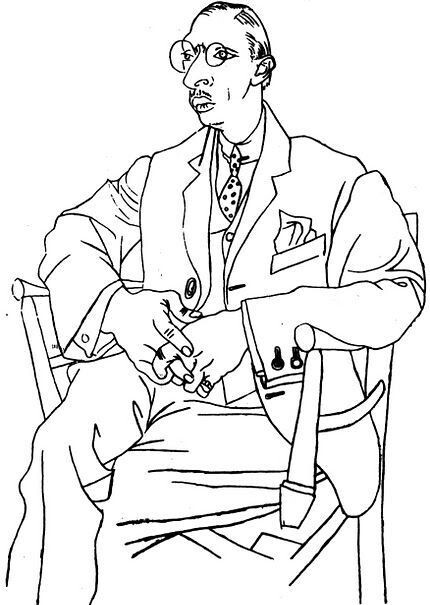
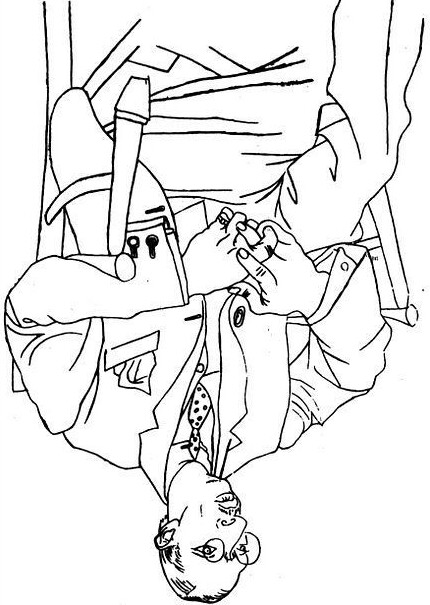
You're going to take this image upside down and copy it.
The drawing materials
01 · Drawing paper
A simple sketchpad or printer paper.
02 · A pencil
Any pencil will do.
03 · An eraser
To remove lines that didn't go right.
04 · About an hour
For the two exercises together. Feel free to take a little longer.
The vase exercise
What you're going to do
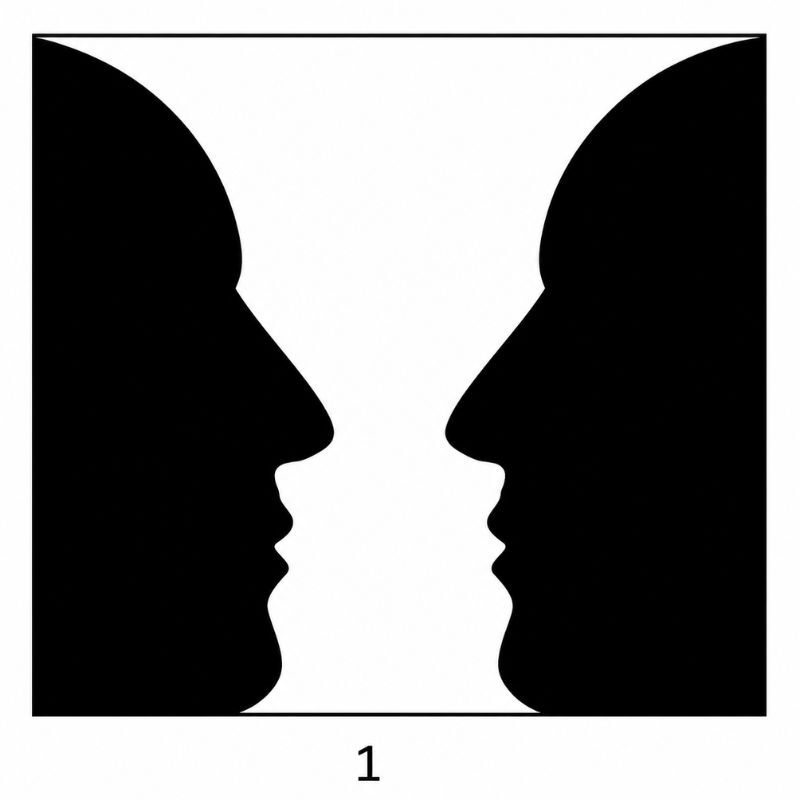
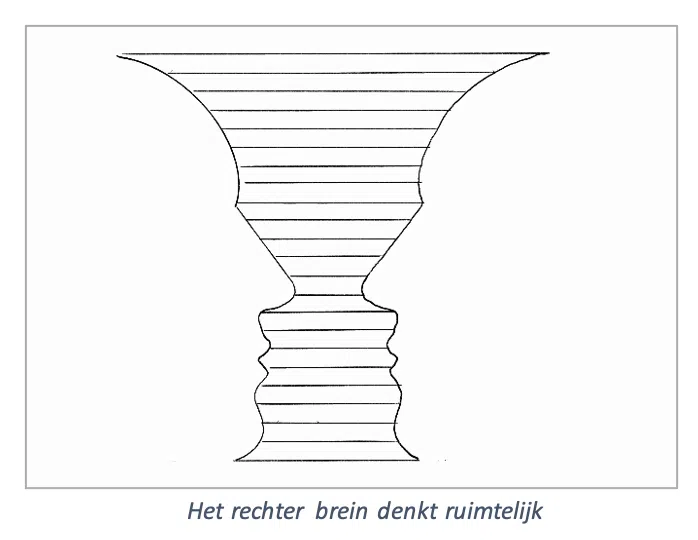
What do you see?
What do you see first: the faces or the vase?
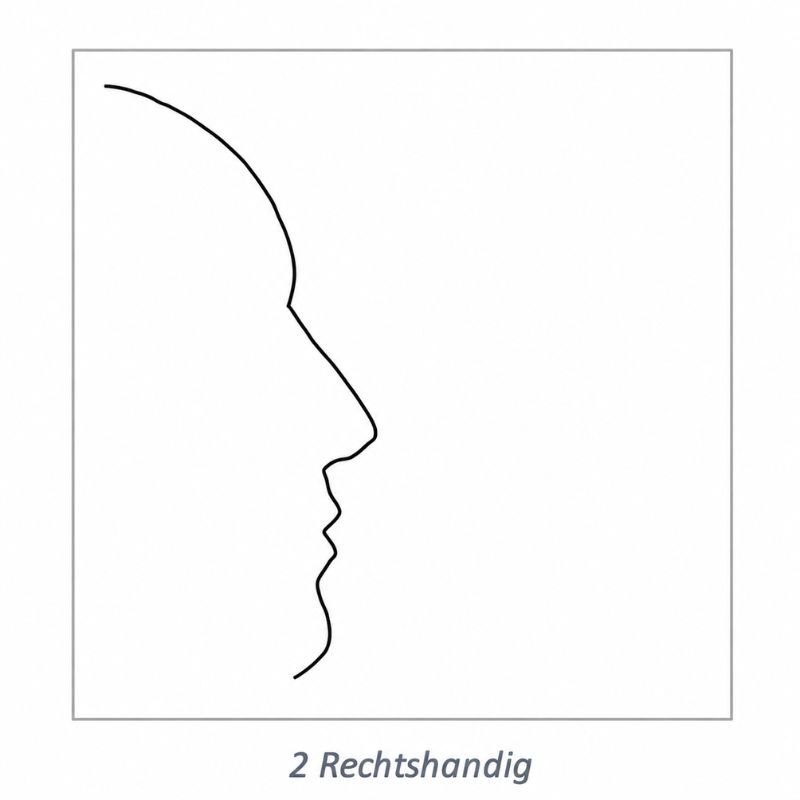
Right-handed
Right-handed? Start on the left. Come up with a face in profile yourself; don't copy this example.
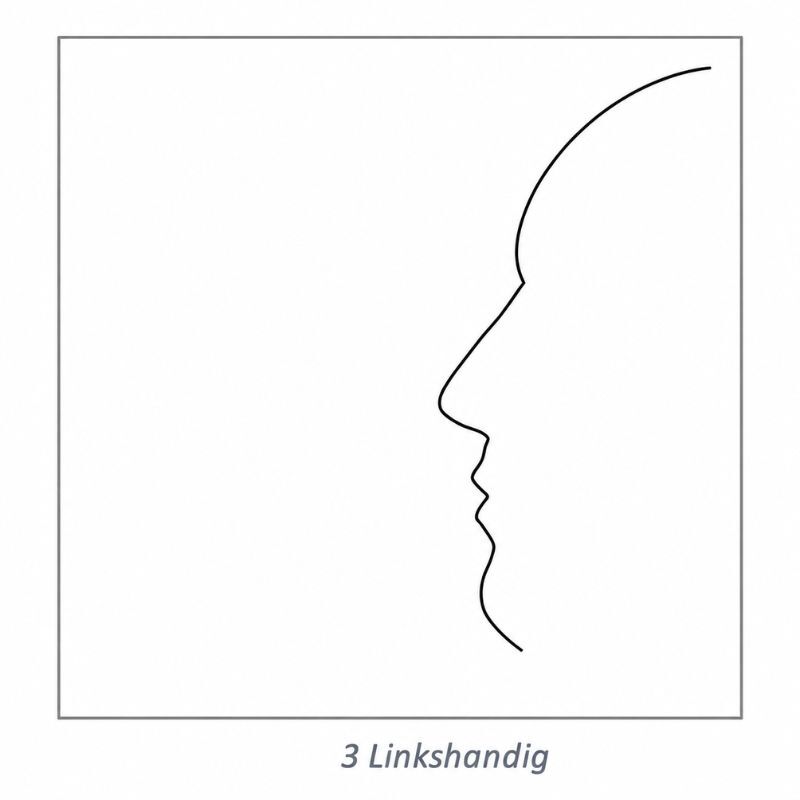
Left-handed
Left-handed? Start on the right. Come up with a face in profile yourself; don't copy this example.
Step by step:
Draw a face from the side yourself (in profile).
Are you right-handed? Start on the left of your paper. Are you left-handed? Start on the right. Come up with a profile yourself instead of copying the example.
Draw a horizontal line at the top and bottom.
Name the parts of your profile.
Go over the lines with your pencil and quietly say what you see as you go: forehead, bridge of the nose, tip of the nose, underside of the nose, and so on.
Use as much language as possible. In this step, you consciously focus your attention on naming.
Do this three times in total.
Now let go of the words.
You've been naming the parts each time. Now you'll see what happens when you draw without those words.
On the other side, draw the profile as a mirror image.
You don't need to use any language for this.
Notice where you get stuck.
Perhaps you suddenly don't know which way to move your pencil. In the method, we call this the conflict between naming and spatial perception.
Observe yourself.
What do you do to be able to carry on?
Finish the mirror-image profile.
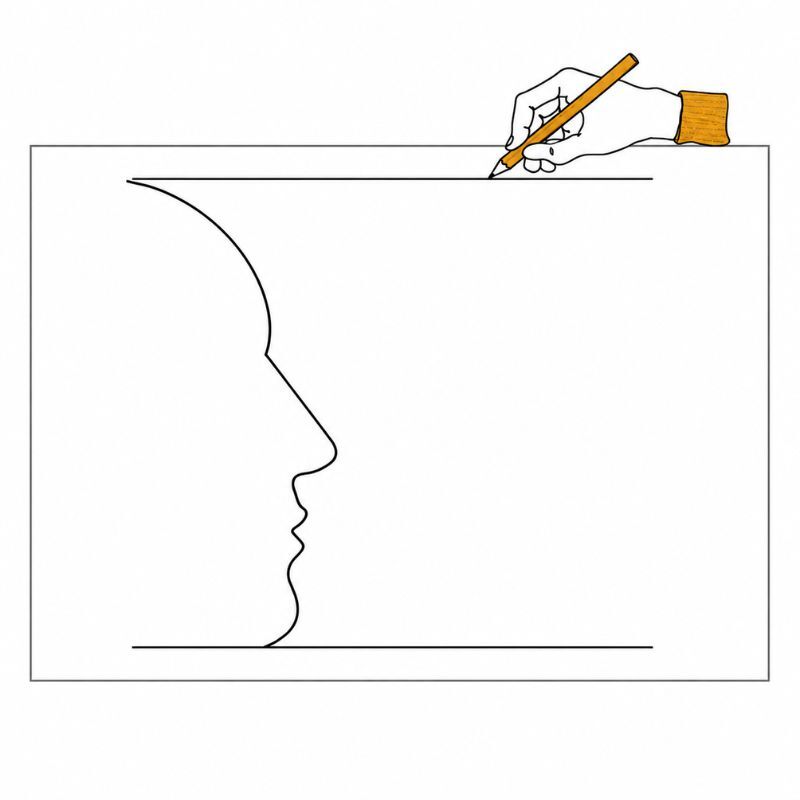
Draw the lines
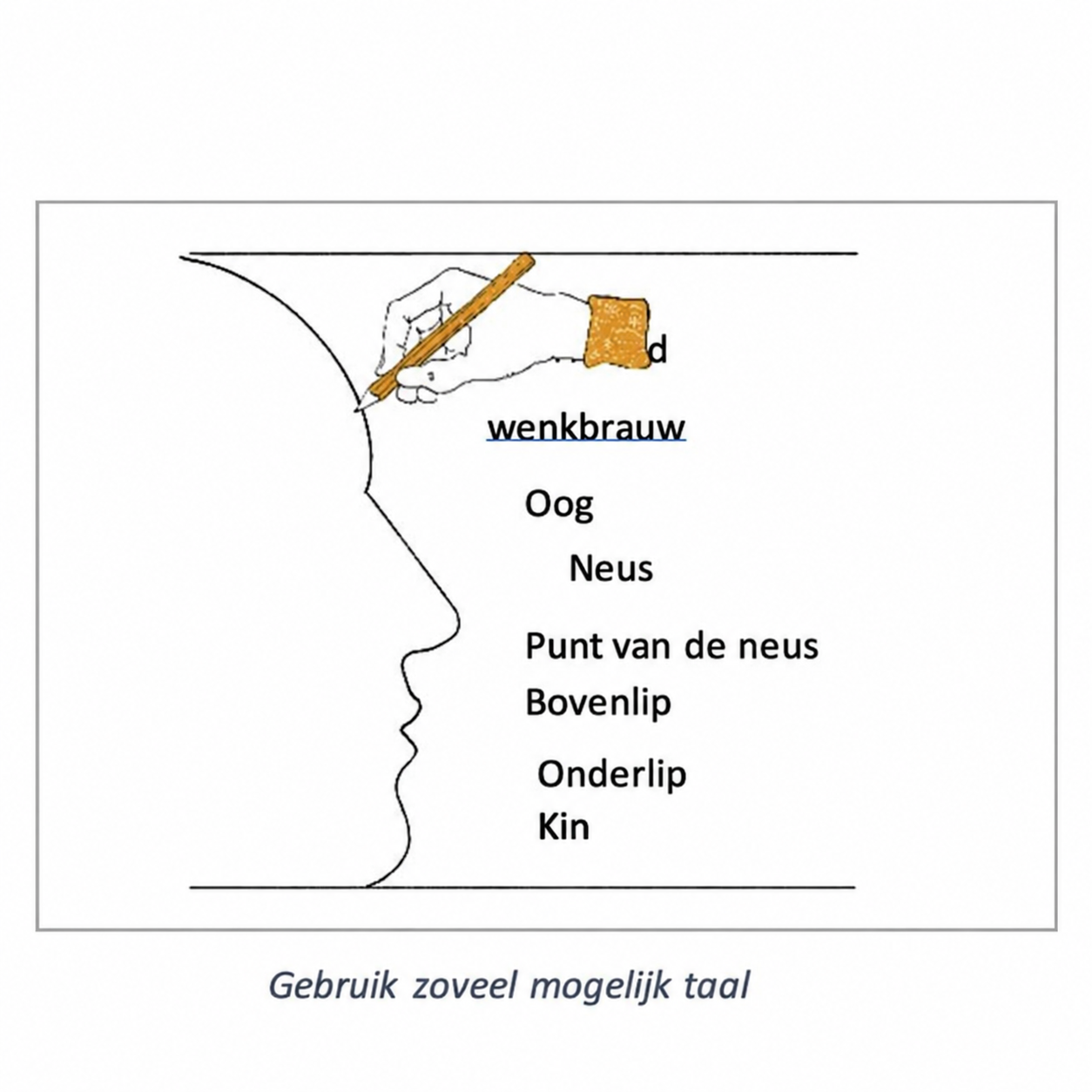
Name what you see
Follow your profile with your pencil and name the parts. The more language you use, the better. Do this three times in total.
Did you get stuck? How did you solve it?
Perhaps it suddenly did work when you looked at the shape of the vase.
Very few people manage to draw the second profile as a mirror image in one go. Almost everyone falters somewhere. Because you named the parts of the first profile three times, you're still strongly engaged with language.
If you look at the space between the profiles, you don't have to draw a ‘nose’ or a ‘mouth’. You follow the shape of the vase. That often makes it easier to carry on.
This is how you discover for yourself how to switch from naming to spatial perception: the way of seeing that we call the right brain's way of seeing in the book.
By looking at the space between the faces, it becomes easier to follow the lines.
The first exercise is complete. Now you'll explore this way of seeing further.
The upside-down drawing
Turn your example upside down.
And surprise yourself.
You're going to copy the upside-down Picasso drawing line by line. Keep the example upside down until you've completely finished.
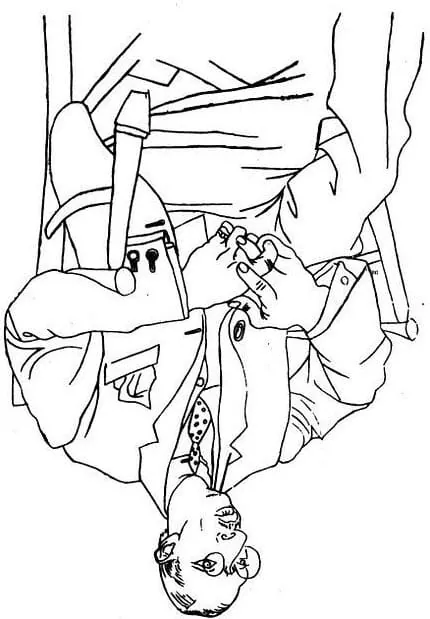
Line by line.
01
Place the example upside down in front of you or beside you.
Look at it as a collection of lines and shapes. The image stays upside down until you've finished the whole drawing.
02
Follow the lines as you see them.
Work from top to bottom and copy each line as you see it. Try not to name the subject. As soon as you recognise something, it's easy to fall back on how you think it looks. So stay with the separate lines and shapes.
03
It doesn't have to be perfect.
This is an exercise in perception, and the result really doesn't have to be perfect. Would you like to judge accurately how long one line is compared with another? Then use your pencil to measure it.
Don't turn the image round
04
The hands.
You often recognise a hand straight away, even upside down. Then it's easy to start drawing what you think a hand should look like. If you like, place a few scraps of paper over the hands so you can follow the separate lines better again.
05
The head.
Do the same with the head: follow the lines and shapes. Partly cover it if you notice that recognising it is getting in your way.
06
Add the very last stroke too.
Finish the drawing before you look at the result. Hold off on judging it for a little while and stay with the lines you see.
WHEN YOU'VE FINISHED
Finished? Turn your drawing round.
What turned out better than you expected?
Take a moment to look. Which lines, shapes or proportions did you capture well? And what would you still like to practise?
Your drawing doesn't have to be perfect. You've practised looking differently, even if beforehand you thought you couldn't put a single line on paper.
Click on the illustration to enlarge it.
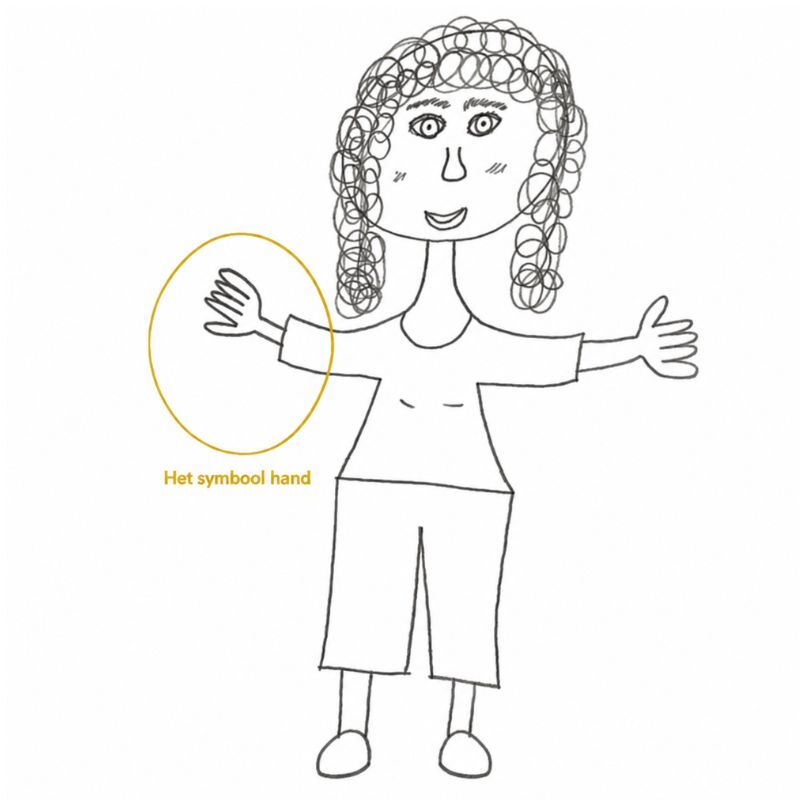
Why drawing upside down helps
When you recognise something, it's easy to draw what you think you know: a symbol for a hand, an eye or a face. Just think of your childhood drawings.
Upside down, the subject is less recognisable. This makes it easier to shift your attention to the lines, shapes and proportions you actually see. In this method, we call that seeing with the right brain.
So you don't need to know how to draw something first. You learn to perceive more accurately.
Want to try again with a different drawing?
Get the extra drawing example by e-mail and keep practising seeing differently.

With an extra little gift.
Spoiler: for (grand)parents…
You will also receive follow-up e-mails from Marianne about learning to draw. You can unsubscribe via any e-mail.
CONTINUE SEEING DIFFERENTLY
You've made a start. How would you like to continue?
You have now practised seeing differently. Would you like to keep going? In my book I take you through it step by step.
With Tekenen (met het rechterbrein) kun je leren you keep practising with lines, spaces, proportions and light and dark.
Sophia Academie · Marianne Snoek

Sophia Academie voor Creatieve Ontwikkeling
www.leertekenen.nl · info@leertekenen.nl
Chamber of Commerce (KvK) 32146051 · VAT NL001323038B63