GERDA’S STORY · MARIANNE SNOEK

One last chance

In this blog you will meet Gerda, who wanted so badly to learn to draw, but despite a long search and many lessons had not yet been able to make her dream come true. Only when she learned to draw with her right brain, was she able to give shape to her great talent.
Drawing from the right-brain drawing method
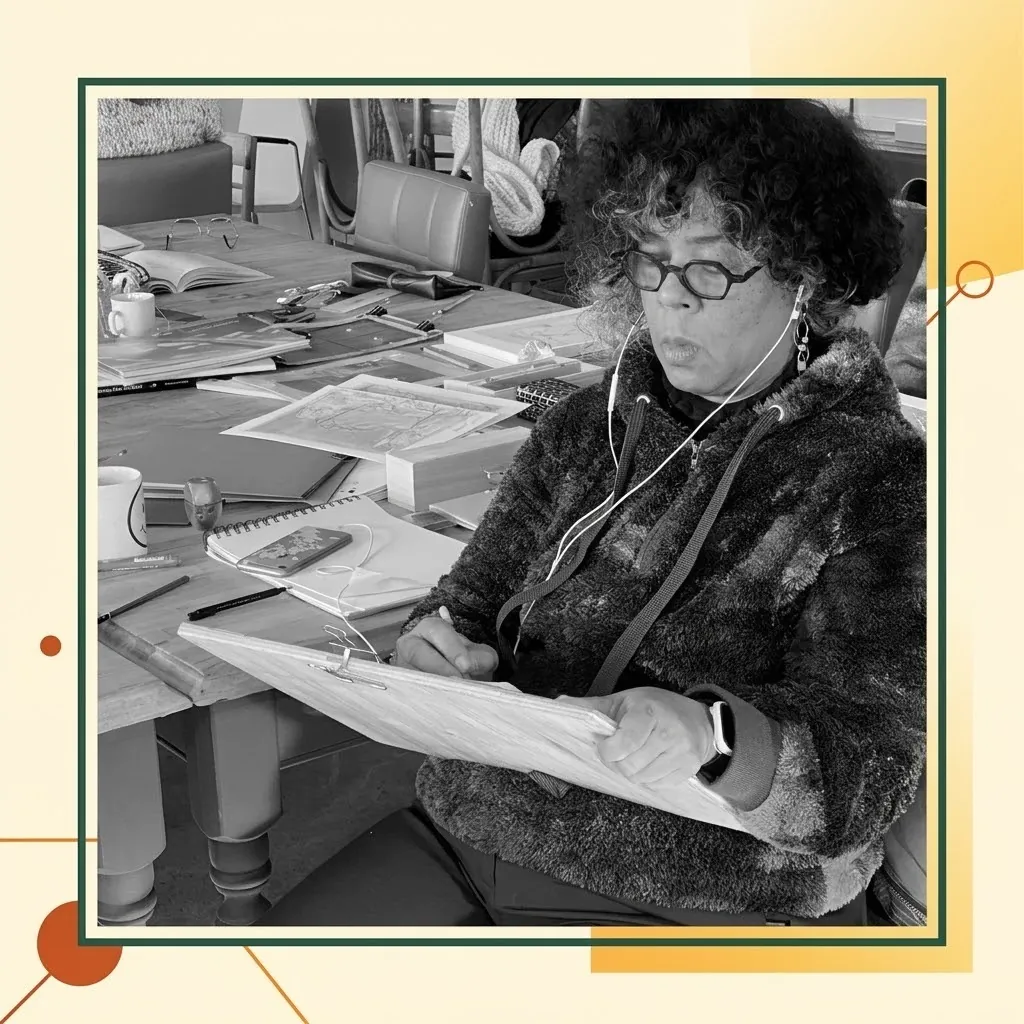
The reason I am still so enthusiastic about learning to draw with the right brain after more than 27 years of teaching is that it changes people’s lives. One of those lives is Gerda’s. Gerda had been struggling with drawing for a very long time before she came to me for lessons. From one teacher to the next, always coming home with that desperate feeling: ‘I’ll never learn it.’ Which wouldn’t be so bad if there weren’t, at the same time, a deep longing to be able to draw after all! It is this drive that keeps her going. But now she is on the verge of giving up. I am, she tells me, her last chance.

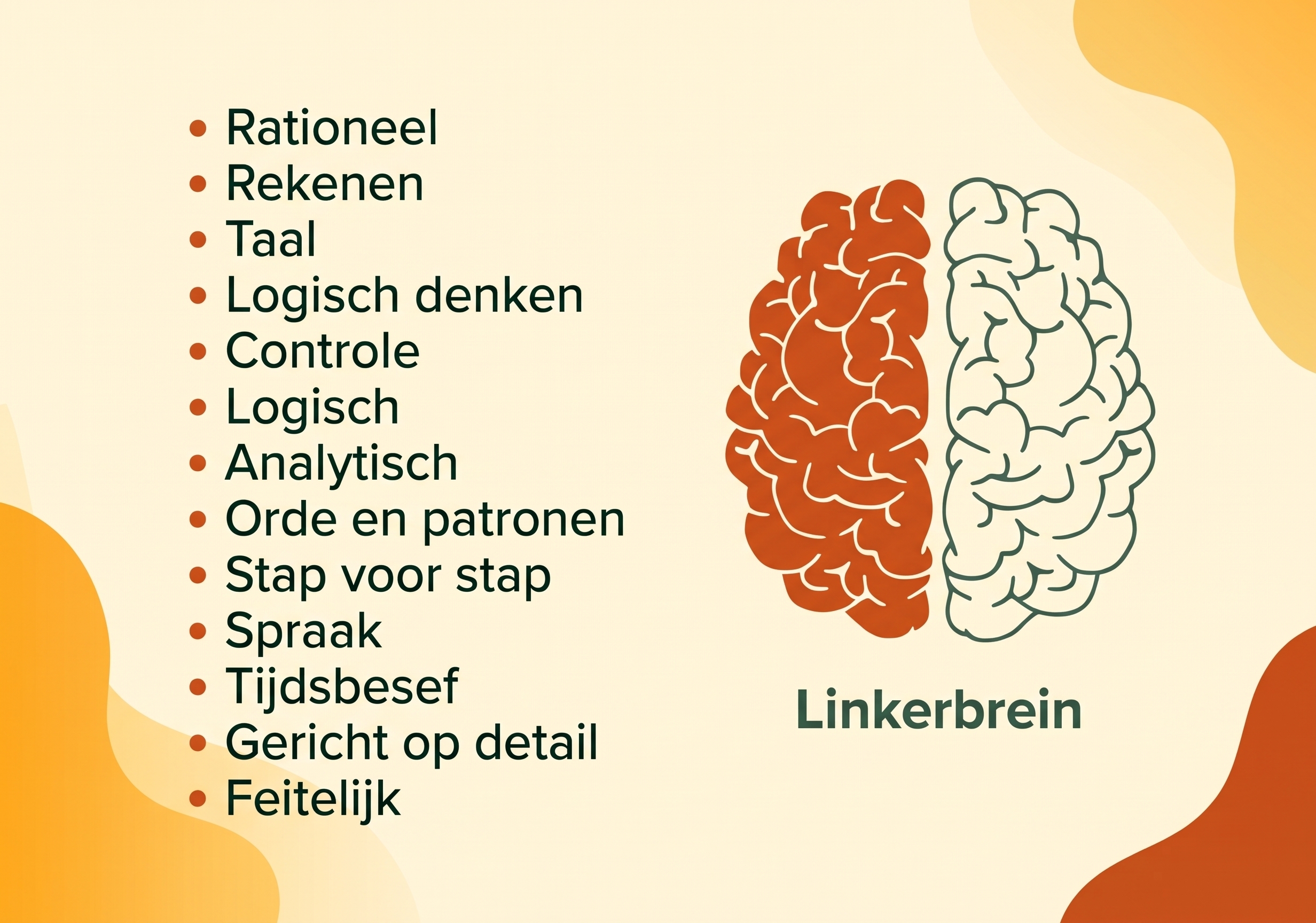
The left brain can’t draw!

We start with the first lessons (back then I still taught in person). We follow the same programme as you do in the book Tekenen (met het rechterbrein) kun je leren. I explain to the group why the left brain cannot draw, and why we need to put it into rest mode when learning to draw. It is a logical story, backed up by scientific tests and important scientists. That matters. After all, the left brain loves logic. And scientific proof. Whatever can be scientifically proven is true for the left brain! (Which of course isn’t always the case.) I need all the left brains in the group to agree with what I am doing. Hence the explanation.

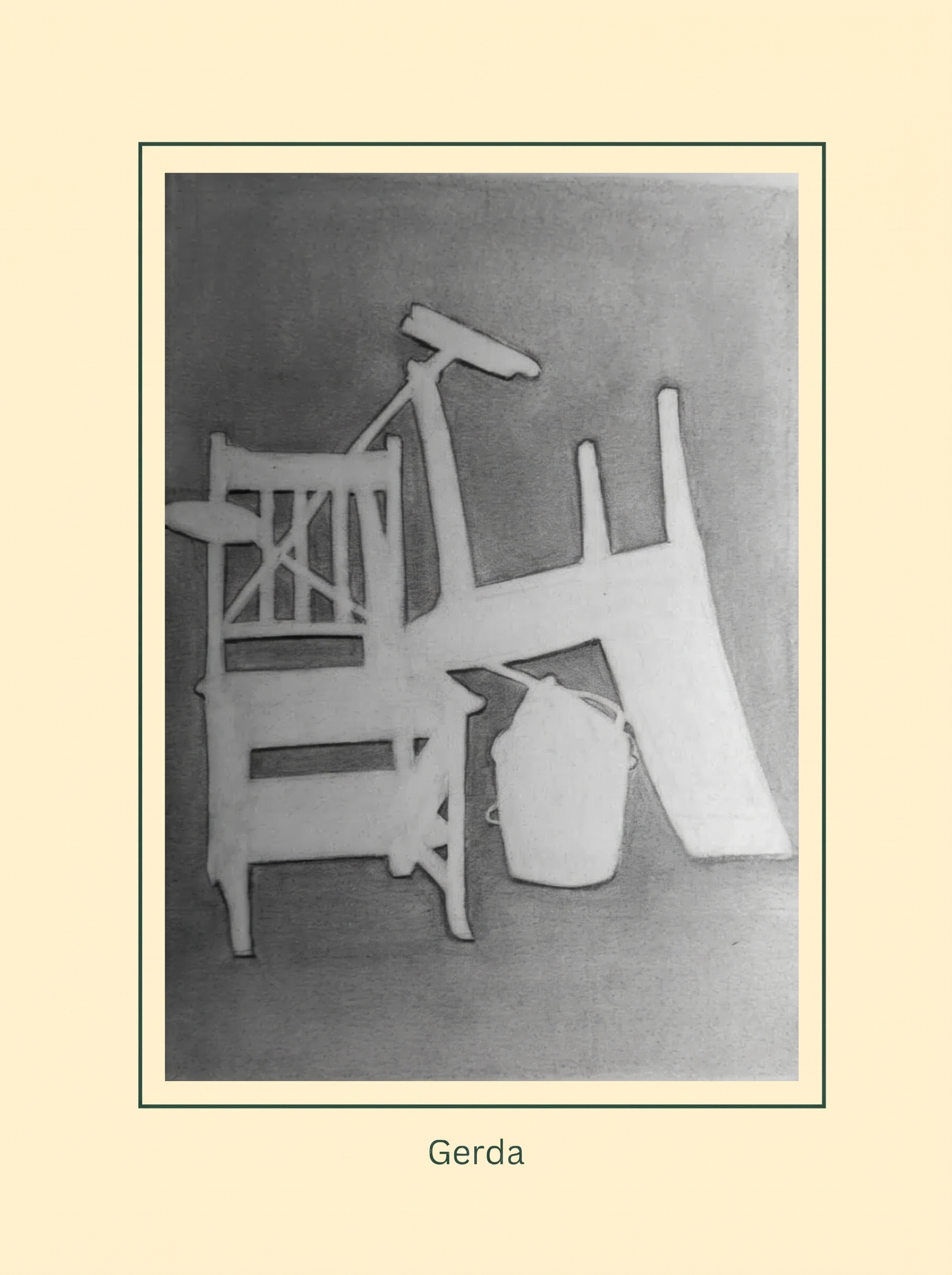
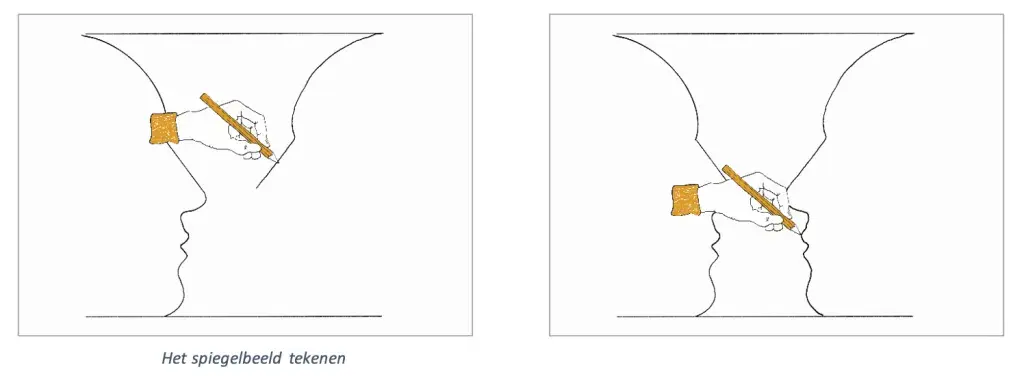
Then everyone starts drawing. We begin with the vase drawing. For me as a teacher, this is an important exercise. Because here my students have to discover for themselves how, while drawing, they switch from the dominant left brain to the drawing brain: the right brain. The better they can do this, the easier it will be for them to learn to draw with the right brain. Gerda went all in. She was determined to seize this last chance to learn to draw. The vase drawing went well for her.
Try the free drawing exercises yourself →

Drawing from the right-brain drawing method

Really learning to perceive

The first day of lessons (or the first chapters of the book) is a gentle paddle. Just dipping your toe in the water to find out how it feels. Only on the second day do we start the real work. Learning to draw is the same as learning to perceive. Anyone who can perceive well can draw well! It's that simple. To perceive well, you need to put the left brain into rest mode. For many people in our Western society, the left brain is dominant. It's the part of our thinking that also 'thinks' it knows better about everything. Drawing included! With clever little tricks, my students learn to put the left brain into rest mode, and then suddenly they really start to perceive. Really look! Really see what there is to see.

That is often a revelation. We often think we look carefully, but when the left brain is active, you often look superficially. A quick glance, a word to go with it, and Bob's your uncle. That's necessary too: our left brain helps us survive and needs to be able to assess a situation quickly. All sorts of details that only distract you are no use to you then. To be able to draw , it's exactly the other way round! You can't draw what you don't see! It's that simple. Through the blind contour drawing exercise, you learn to see what there really is to see. Then you can draw it, too.
More about drawing with the right brain →

Drawing from the right-brain drawing method

Dominant left brain

The dominant left brain also gives us a sense of (false) security. It's the part of our thinking that would rather keep everything as it was, as it's familiar. By learning to perceive with the right brain, the left brain loses control. What can then arise is 'fear'. It's the ego that is afraid of losing itself in the unknown, in uncertainty and in the unexpected. Whereas Gerda was drawing calmly yesterday, it's going much less well now.
  • She is restless (left brain)
  • All kinds of emotions come up, such as fear, anger, worry (left brain)
  • She is struggling with herself
That's nothing new. The left brain sometimes resists and comes up with all these kinds of emotions. That's when I'm there to steer it all in the right direction
  • To comfort (the artist is a child)
  • To encourage
  • To keep the focus
Drawing from the right-brain drawing method

The liberation

Anyone who keeps going, who perseveres, always reaches a moment during the lessons (and while working through the book) when the brakes come off. A great sense of freedom and enjoyment in drawing emerges. Why is that? Our left brain has only a very limited view. A view that is often detached from actual reality. Like the image of the little man at a zebra crossing. It isn't a real man; it's a shortened, shrunken, minimised version of reality. That's how looking with the left brain works, too. Anyone who learns to draw with the right brain frees themselves from this limited view of the left brain and arrives at something that is connected with you as a person. Something that draws, as it were, on who you really are. Your soul. By putting the left brain into rest mode and freeing the right brain from the dominance of this part of our thinking, you set yourself free, as it were.
Drawing from the right-brain drawing method

A radiant & enthusiastic Gerda

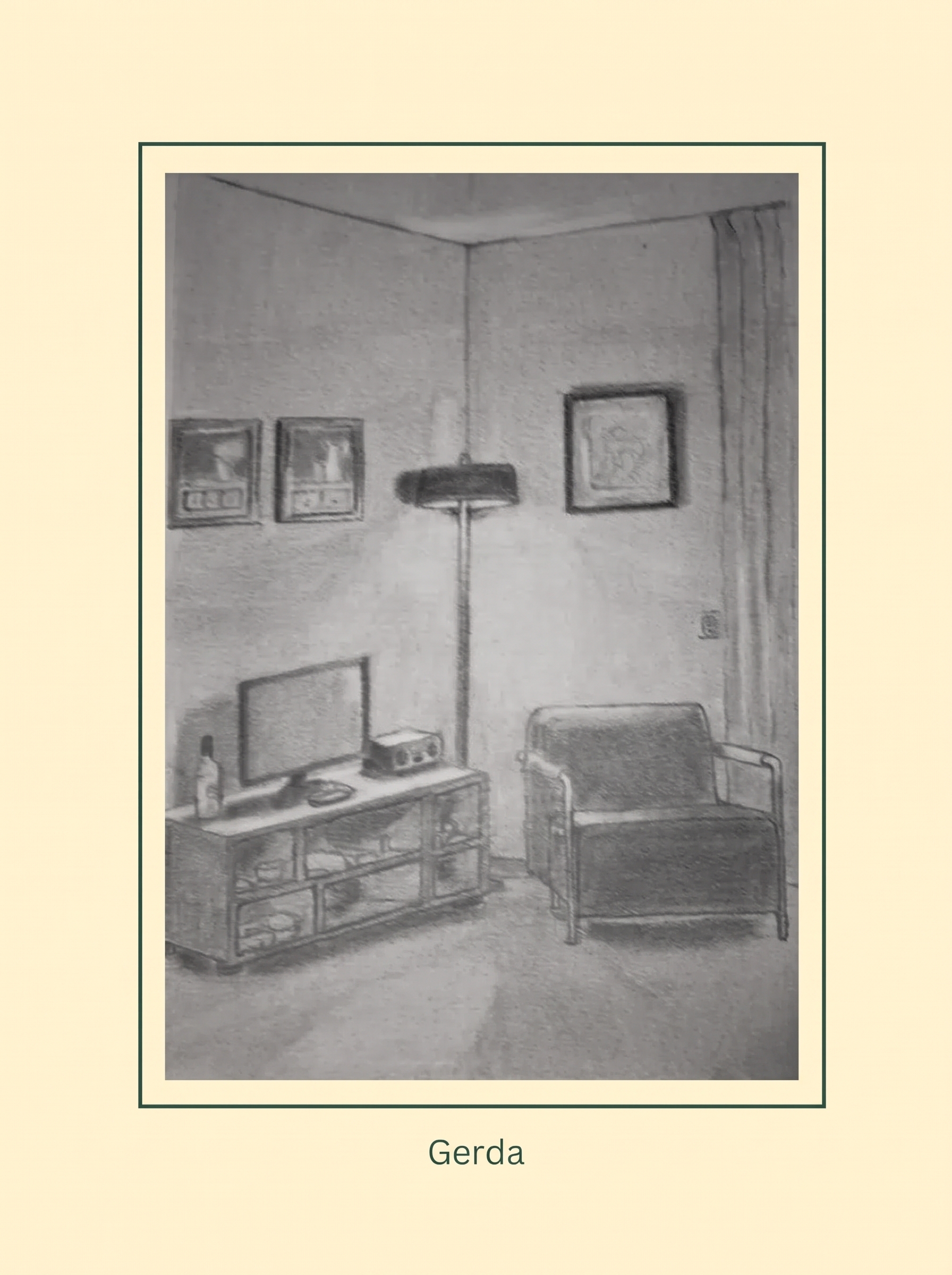
The further we get into the workshop, the more beautifully Gerda draws! Her artist's soul, which longed for this moment for so long, is almost overflowing with joy. She can hardly believe it: the beautiful, sensitive drawings she is making. And what a difference. The anxious, insecure, hurt Gerda has, in just a few days, changed into a radiant woman who looks wide-eyed at all the beautiful things coming from her hands. Who wouldn't be happy to witness this?

Everyone can learn to draw!

For everyone who would love to learn to draw, this transformation is possible. Of the thousands of students who have attended my workshops (and now those who buy my books), many started out (being able to do) nothing and ended up expressing their artistic abilities in full glory. Many of them have gone on to further study at an academy, have their own art practice, or still enjoy every day the drawing ability that allows them to express themselves through drawing and painting.

Read more experiences from students →

What comes next

Once you have learned something – like driving or cycling – it is good to practise a lot. There is a purely physiological (bodily) reason for this. By practising, connections form in your brain so that you get better and better at what you have learned and you never forget it again. With this in mind, during the years I taught, I created a follow-up programme for the Learn to Draw workshop. This has now become the Workbook Tekenen (met het rechterbrein) kun je leren . In it, you first repeat everything you have learned (in the main book). As every good teacher knows: repetition helps you understand everything even better. After that you move on to free drawing, where you practise, practise and practise everything you have learned.

100 consecutive days? Why 100? It has been scientifically proven that if you do something for 100 days, it becomes a habit. After that, all you want is to draw (for a little while) every day. How wonderful is that?! The Workbook is a challenge; for 100 consecutive days you draw for at least 30 minutes. To help you keep up this challenge, we have developed the app Tekenen kun je leren . It helps you with tracking (keeping track of your progress), notifications, moments of inspiration and, in the end, a prize for sticking with the 100-day challenge.

See the app with the Workbook →

What drawing can bring you

“
“I could draw little more than a stick figure. Thanks to your books and following the lessons carefully, I have already come a long way. I recommend your books and method with great enthusiasm to anyone who wants to draw.”
— Karina (Belgium)
“
“I can now draw everything I see and I keep learning. I'm really happy with it!”
— Buyer of the Duo Package
Drawing from the right-brain drawing method

Founder and owner of Sophia Academie. Drawing coach, writer and artist.

The moral of the story

  • Learning to draw with the right brain is fun
  • Learning to draw with the right brain is relaxing
  • Learning to draw with the right brain teaches you to really observe
  • Learning to draw with the right brain gives you artistic wings
  • Learning to draw with the right brain makes you creative.

So, are you still doubting your ability when it comes to learning to draw? Like Gerda, give yourself a (last?) chance! If you order the Duo Package, you'll have everything you need. You'll then follow exactly the same programme that I taught for years in my Leer tekenen workshops.
And do you know what? You don't have to do it alone. When you buy one of the books, you can sign up for the private Facebook group Tekenen kun je leren. Almost 1,000 people there are working with the same book; you can admire each other's work, inspire or encourage one another, and ask me a question every day if there's something you want to know.Will I see you there?! I'm looking forward to it.
I’ll buy the book →

Sophia Academie voor Creatieve Ontwikkeling

www.leertekenen.nl · info@leertekenen.nl

Chamber of Commerce (KvK) 32146051 · VAT NL001323038B63